Student Posts

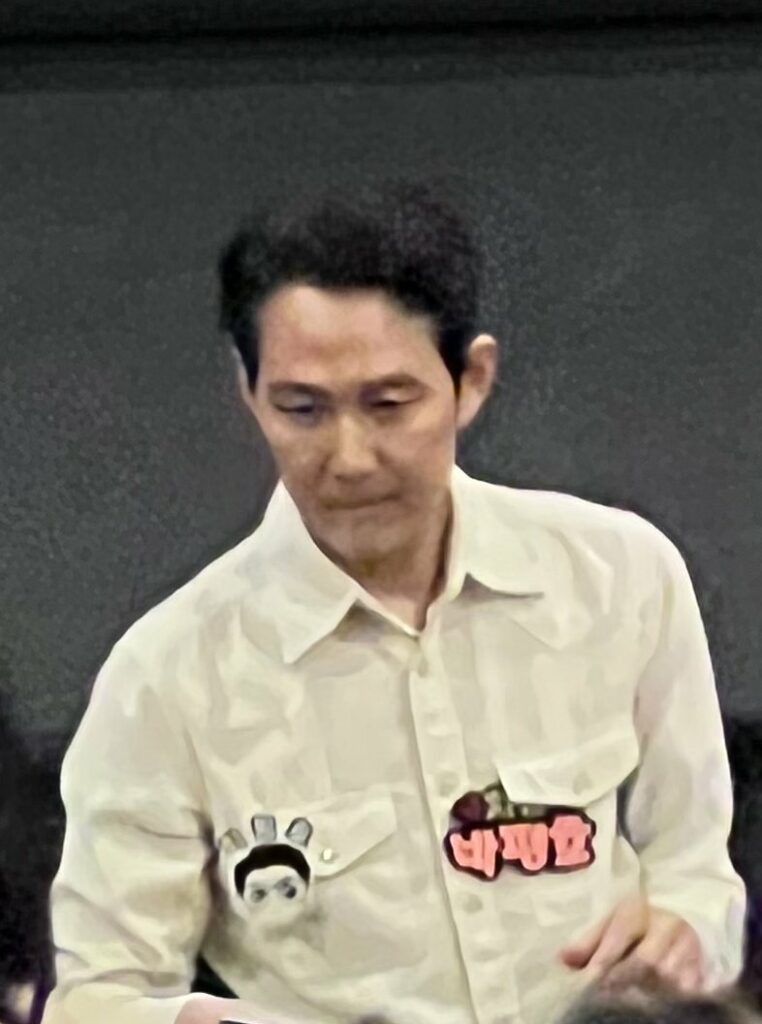
Have you seen him before?

Before:

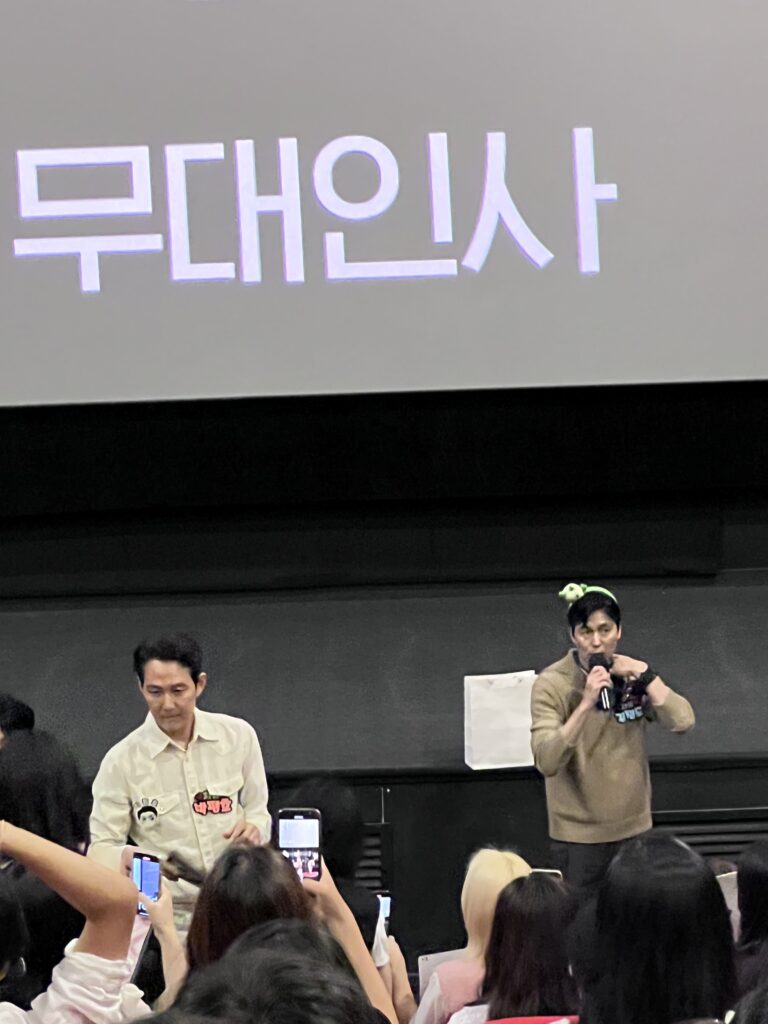
‘Hunt’ Stage Greeting by Jenny Choi is licensed under CC BY-NC-SA 2.0

After:

Lee Jung-jae, the Squid Game Actor by Jenny Choi is licensed under CC BY-NC-SA 2.0

Let me guess. Didn’t you think, “Who are they?” as soon as you saw the first image? (or “What does it say?”) How about the second image? Do you think you know him? Or do you think you’ve seen him somewhere before? If you still can’t get it, then I’ll give you a hint: Squid Game 🦑

If you ever watched ‘Squid Game’ on Netflix, then you’ll probably recognize him. He is the lead actor and the most famous actor from Squid Game.

I was browsing my iPhone gallery to see if there was any image I could use for the Composition assignment. And I found something interesting. This is the photo I took last August when I was in South Korea. I had a chance to go to the stage greeting for a Korean movie called ‘Hunt.’ In South Korea, when a movie is released, the actors and directors perform stage greetings in the movie theaters for about two weeks for promotion. My seat was a little bit far away from the stage. My hands and eyes were very busy taking photos, taking videos, watching actors, and checking my phone screen to make sure I take good photos and videos. I thought this image would be an excellent example to make it derivative. I decided to crop the original image to create a new focal point: Lee Jung-jae, the most famous Squid Game actor (& 2022 Emmy winner!).

The main focus in the original image is obviously the actors. Therefore, I cropped the Korean words on the movie screen and the fans sitting. The two actors in the image are both famous in South Korea. Squid Game was very popular globally. So, I decided to crop the actor on the right and emphasize a focal point on the Squid Game actor on the left.

I wonder if anybody watched the Squid Game and recognized him. 😆
A skyline is worth a thousand words

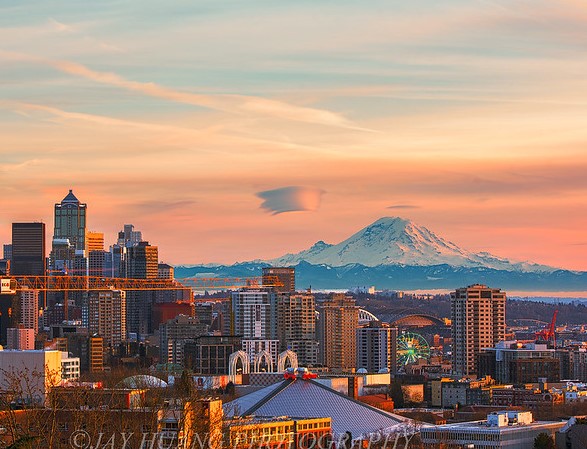
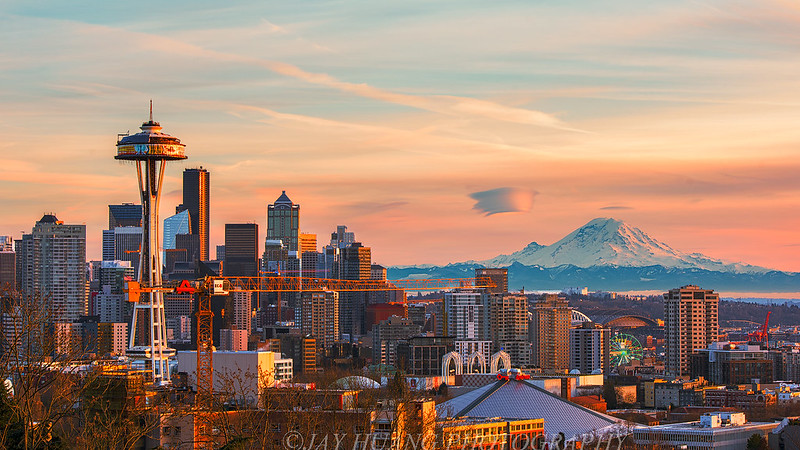
“Seattle Skyline at Sunset” by Jay Huang licensed under CC BY 2.0
“Mount Rainier and Seattle” by Danielle Evans licensed under CC BY 2.0

I’ve always had a fascination with skylines and how much definition they give to cities. Landmarks, mountains, buildings, all of these elements come together to create the cities that we know and love. I don’t know about you, but I’m a huge fan of the 2013 PS3 game “The Last of Us,” (yes, HBO picked it up and turned it into a show that’s airing right now! ) which takes place in a familiar, but dystopian future. One of the best features of the game is its use of skyline and landmarks to move the story along, almost as if the overgrown and worn cityscapes are characters in the game themselves. Though the locations change throughout the game and its sequel, much of the dramatic tension is focused on landmarks scattered throughout the game. Though these landmarks have changed, become overgrown, or broken, to the player of the game, they are still recognizable (yes, that overgrown and possibly zombie infested building is still representative of Boston!)

The first picture above is a complete skyline of Seattle with the Space Needle on the left and Mount Rainier in the background. I would think that the most recognizable landmark would be the Space Needle, and without it, Mount Rainier is brought to the forefront and becomes the most prominent feature to the viewer. Is it still Seattle? Of course. Though to the average viewer, this may not be as apparent (maybe without the Space Needle, this is more like other cities in the Pacific Northwest?) When I was thinking about this assignment, I wanted to look at how landmarks (and when they change or are removed) really give a sense of place and character to a city. It’s what makes a game like “The Last of Us” so compelling because those skylines and landmarks are so familiar to us, even though they might have changed in one way or another.

Alterations

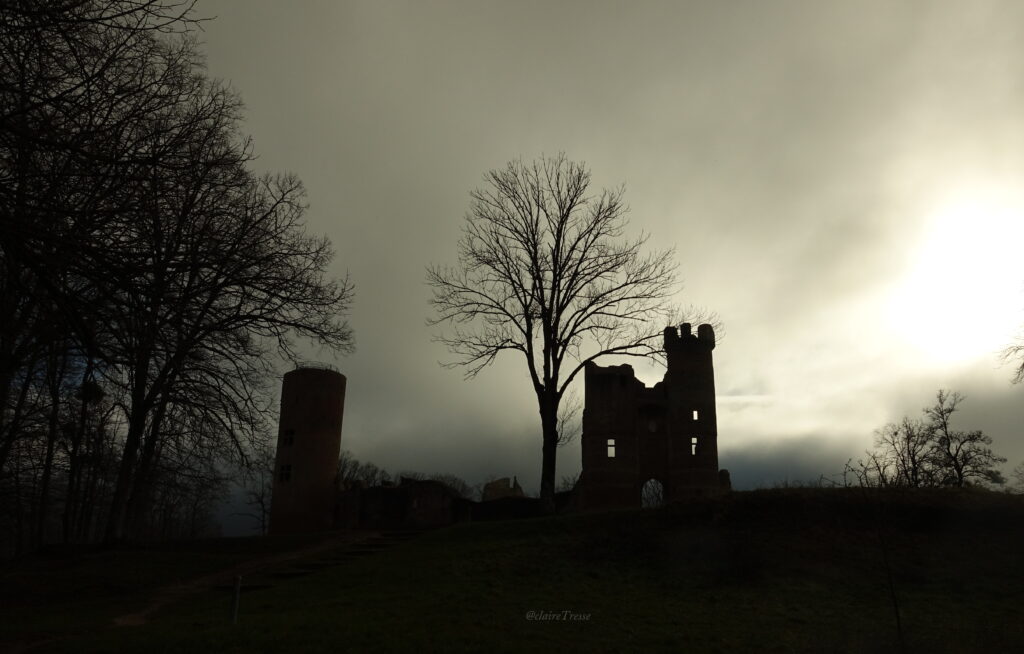
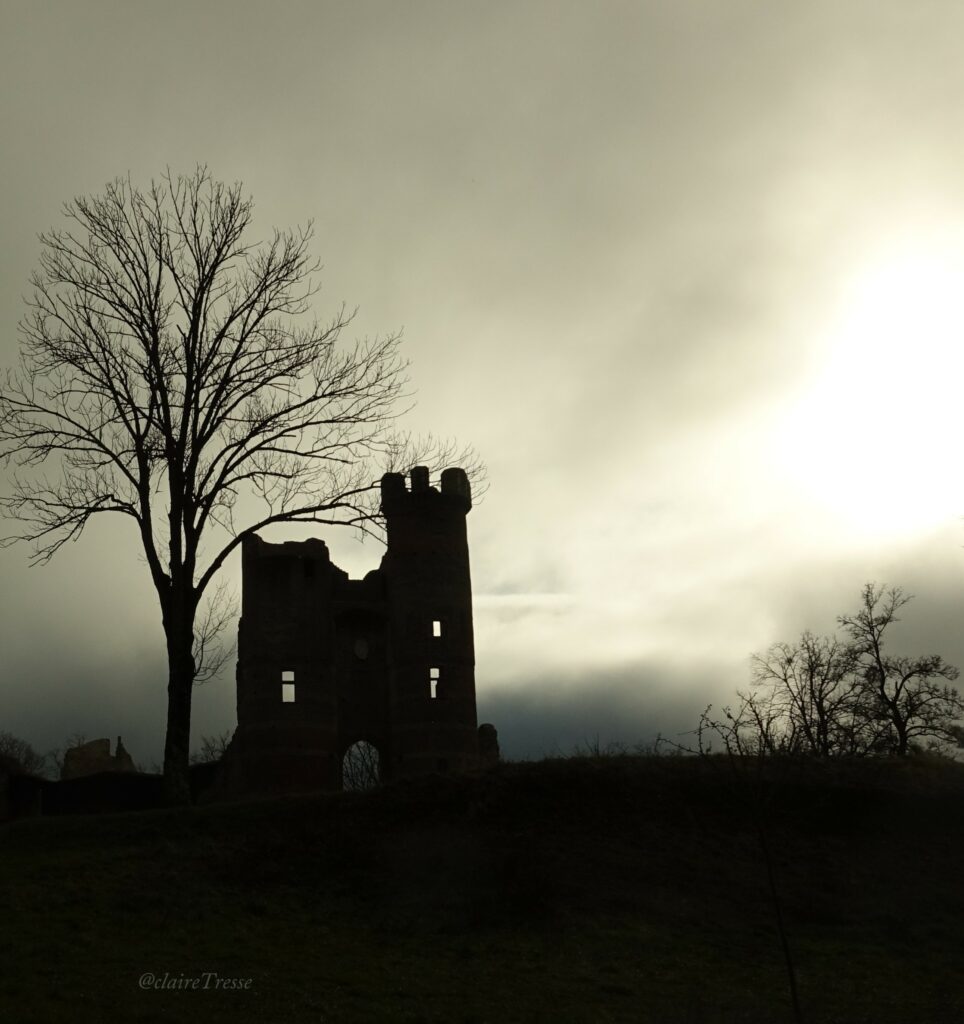
“Daybreak” by Megan Kosove is licensed under CC BY-NC 2.0

It’s amazing how much simply cropping a picture can change how it may be interpreted. In this example, while there isn’t anything inherently wrong with the original, cropping it to leave out some details and move the focal point changes its meaning. Although art never truly has only one meaning and it’s left up to the viewer to develop and interpret their own, between these two pictures, it is undeniable that they invoke different paths of thought. While the first one appears more distant and gives off an isolated feeling, my cropped version makes the subject feel closer and attempts to create a feeling that is a bit more grounded in the structure rather than the stretch of ground before it as in the first picture.

Both the original and derivative above tell stories and invoke emotions of their own. In my opinion, there is never only one way to portray a scene, and I don’t believe that one is more correct than the other. Cropping is important in how it alters how a viewer experiences an image; therefore, the one taking or cropping an image must keep in mind the focal point and subjects contained within as small changes can make the same image appear completely different even though they cover the same scene.

A Moment of Reflection

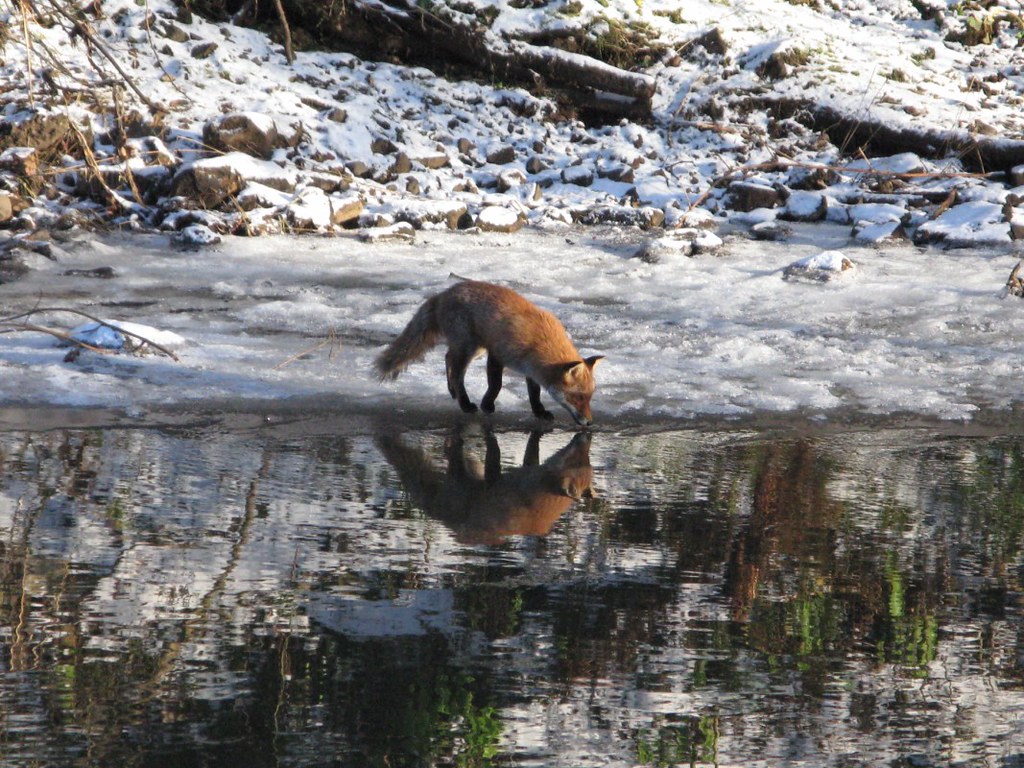
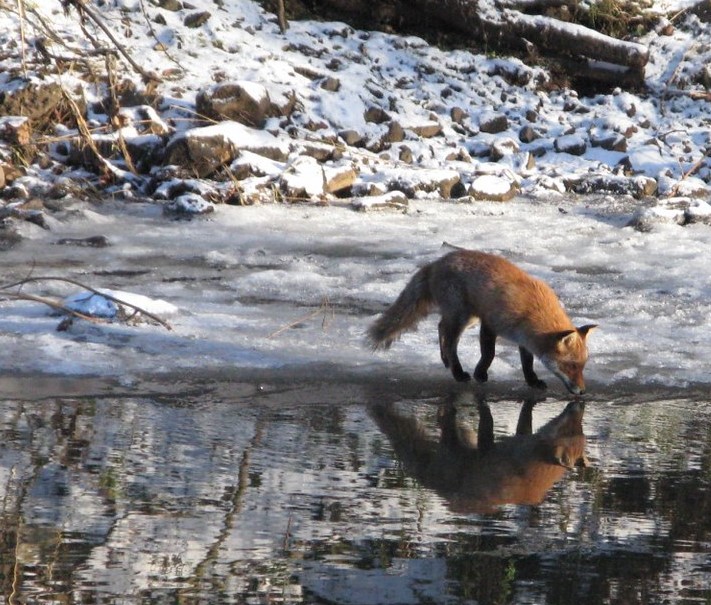
The original image is on the left and the adjusted image is on the right. I searched through a plethora of images for this assignment. This may not be the most dynamic image but it is the one I kept coming back to, and ultimately chose to use. The original image shows the scene of a fox dead center of a very serene setting. The reflections in the crystal clear water help create an intriguing image, that lends the observer a moment of pause. While this image is lovely and many may think it is perfect as is, I feel that the fox being completely centered was a miss by the original artist. This gives the scenery too much breath and life that seems overtake the focal point that is the fox. After playing with the image and performing multiple crops to find one that satisfied, I felt that cropping and moving the focal point made the image standout more. In the end, with a couple adjustments this image becomes more intriguing, at least to my eye.

Derivative (After)
“Mirror Image” by Mellissa Clark is a derivative of
Reflection” by devinshire is licensed under Creative Commons License Attribution 2.0 Generic CC BY 2.0.

I cropped this image with the photo editor software that came with my laptop. I used the rule of thirds and forced the fox, along with its reflection, to the right side of the image. I have the reflection and fox sharing the cross section of the bottom right of the rule of the thirds grid. I believe this makes the image more pleasing to the eye and more enjoyable to the observer because it enhances the fox and reflections visibility and the viewer can see nuances that were not visible before. This also lends more appreciation to the wilderness, snow and water that are in the image. By drawing the eye to the right, the scenery is somehow enhanced and becomes more appreciated. One can also appreciate the numerous textures and colors within the photograph due to the tighter crop. This makes one want to reach out and run your fingers through the water or the fox’s coat.

The Threat

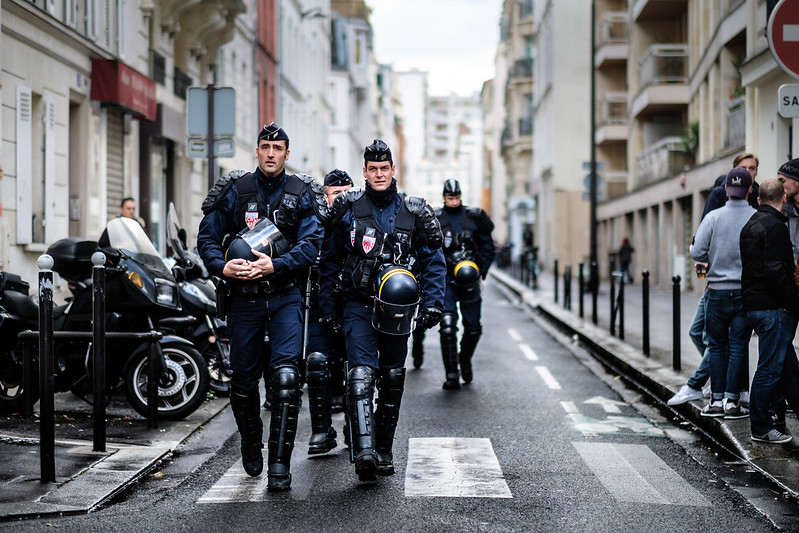
French Anti Riot/Terror Police, Paris” by Kristoffer Trolle is licensed under CC BY 2.0.
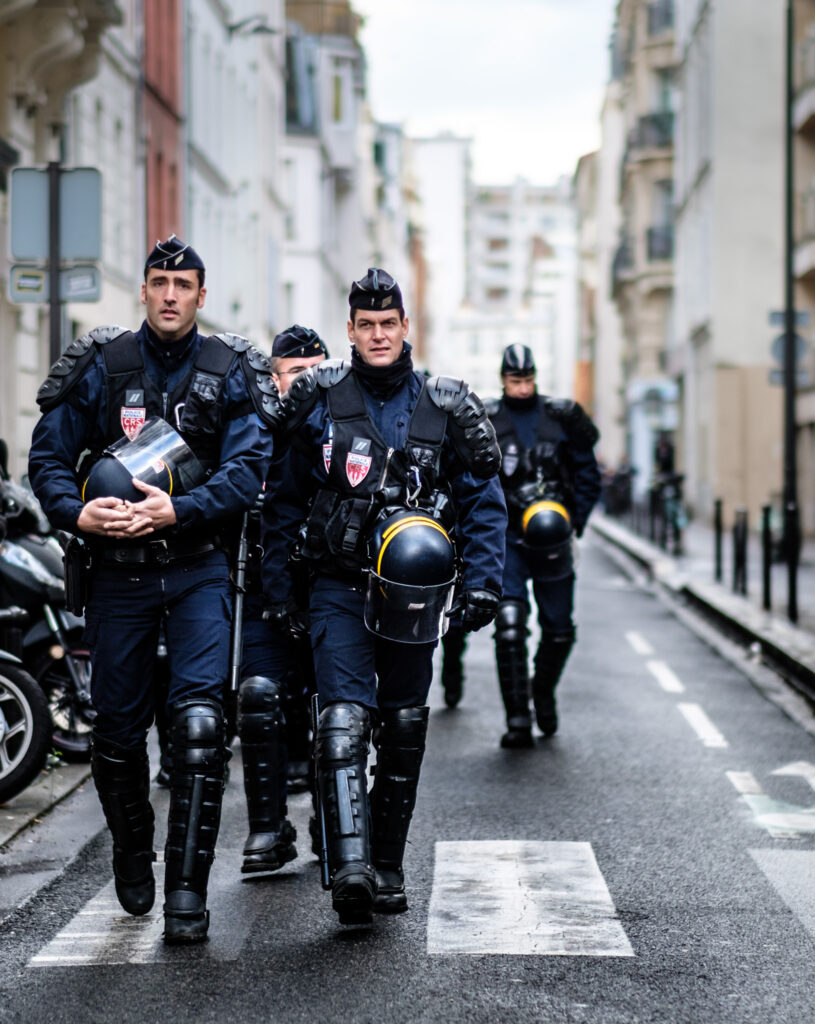
“Patrol” by Maryann Shirley is licensed under CC BY 2.0

This photo was taken during the riots that took place in France in December of 2022, where dozens of officers were wounded. What initially drew me into the original photo was the high contrast and focus surrounding the police officers. I didn’t see that there was anything technically “wrong” with the original, but I felt as though the emphasis surrounding the emotion of the police officers was lost in the photo as a whole. There are people standing off on either side of the road and motorcycles cluttering up the left side of the photo, so in my derivative, I wanted to bring more attention to the emotion shown on the officers faces. Using the rule of thirds, I kept the crop at eye level and created an intersection between the front two officers heads. This created a sense of movement up the street, keeping the intersection at eye level and bringing the photo over more to the left, and brought more focus to the expressions on the officers faces. In the derivative, the fear on the left officer’s face and the concentration on the right officer’s face are enhanced and the emotions are clearer. I then cropped out the group of people to the right of the road and the man standing to left behind the bikes bringing focus solely to the officers marching forward toward the chaos that they were about to face.

If you didn’t take a picture, did it really happen?

Before:

“Parking Garage Sunsets” by Corinnag is licensed under CC BY-NC 2.0.

After:

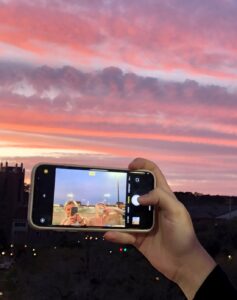
“Who is taking a picture of who?” by Corinnag is licensed under CC BY-NC 2.0.

What Changed

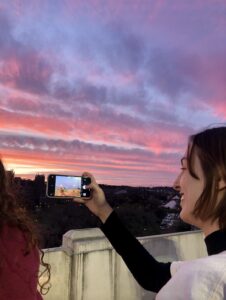
To create a new image, I cropped out the figure on the left of the screen, the figure holding the phone, the parking garage, and a significant portion of the sky. In doing so, I put the focus on a phone and the photo displayed on that phone. I centered the new subject on the bottom left side of the photo to allow room for the hand holding the phone and the beautiful sunset in the background. I wanted to leave those because I felt they made the image interesting while still allowing me to draw to user’s focus to something new.

The Change of Focus

The photo above went from a photo of a girl taking a picture of her friends to a photo of a phone with girls taking a picture. Slightly confusing, I know. The subject of the original photo is the brown-haired girl. Your eye as a viewer is drawn to her and what she is doing. It is almost as if you filter what is happening in through her perspective. You see a girl who is enjoying a sunset with three of her friends. She is clearly smiling as she turns the camera unexpectedly to the girls behind her instead of the beautiful sky in front of her. It captures a goofy, lively moment.

The cropped photo tells a story from the perspective of a cellphone. The phone tells of two girls quickly trying to capture the sky before it fades away. With multiple subjects cropped out, it no longer feels like a group hangout and you no longer see visible smiles. The photo as a whole seems far more focused on artistically capturing a photo within a photo than capturing a moment between friends (as it did previously). The story is more about what is happening than what emotions are present.

Cropping Concepts

  • Crops the photo to tell a (different) story 🠮 (From a goofy moment to an artistic moment)
  • Crops to Change or Emphasize a Focal Point 🠮 (From the brown-haired girl to the subjects on the phone)
  • Leaves out unnecessary details (simplifies the background) 🠮 (Removes the girls in the foreground and the parking garage)

Trees in the Forest

Trees on Forest with Sun Rays
Photo by Sebastian Unrau on Unsplash
Free to use under the Unsplash License

Trees on Forest with Sun Rays
Photo by Brittany Geib on Unsplash
Free to use under the Unsplash License

I chose the Trees on Forest with Sun Rays by Sebastian Unrau because it looked like a very pretty forest but I felt like the photo could be elevated just a little to make it brighter. The shadowing in the photo made the outer areas quite dark and didn’t draw my attention quite as much as I thought it could before the crop. I think that the tree and focal area that the author was trying to draw our attention to was a little distracting with all the extra trees and darker shaded areas. I used the third method to crop the image and make the focal on the tree and the brightness of the sun’s reflection on the forest. Having those two areas of the focal point really draws your eyes to the brightness of the sun and the tree being the focal point in the forest. I love the way the cropped image makes me feel like this is an early morning when the sun has just reached the peak point in the sky. It is quite a stunning shot by Sebastian Unrau.

Their team must be losing

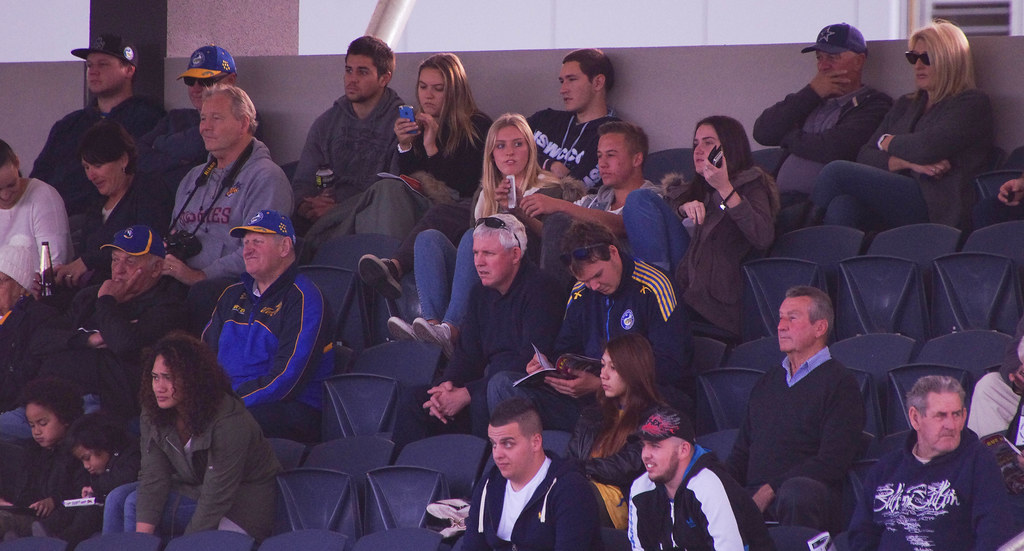
CROWD” by NAPARAZZI is licensed under CC BY-SA 2.0.
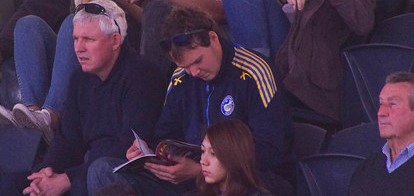
“The Bad Game”  is licensed under CC BY-SA 2.0.

Looking for images, I wanted to find a picture of a crowd to pick someone who stood out. Immediately when I saw this photo, I thought people looked bored at the game rather than the expected excitement. I wanted to make a different focus for the picture. The original photo is an image of a crowd of people on their phones or eating, implying a lull in the action. But I wanted to focus on one particular subject—a man reading during a game. Something about a man bringing a magazine to a sporting event is funny. I wanted to crop out the rest of the crowd to focus on my new focus- the reading man. Originally I wanted him to be the only subject of the composition but cropping it further decreases the quality significantly, and it becomes less a focus on a man and more a study of pixels. I also wanted to crop it in such a way as to keep some of the other bored participants. Whatever this game was, it must not have been going well.

I think I’ve been spotted…

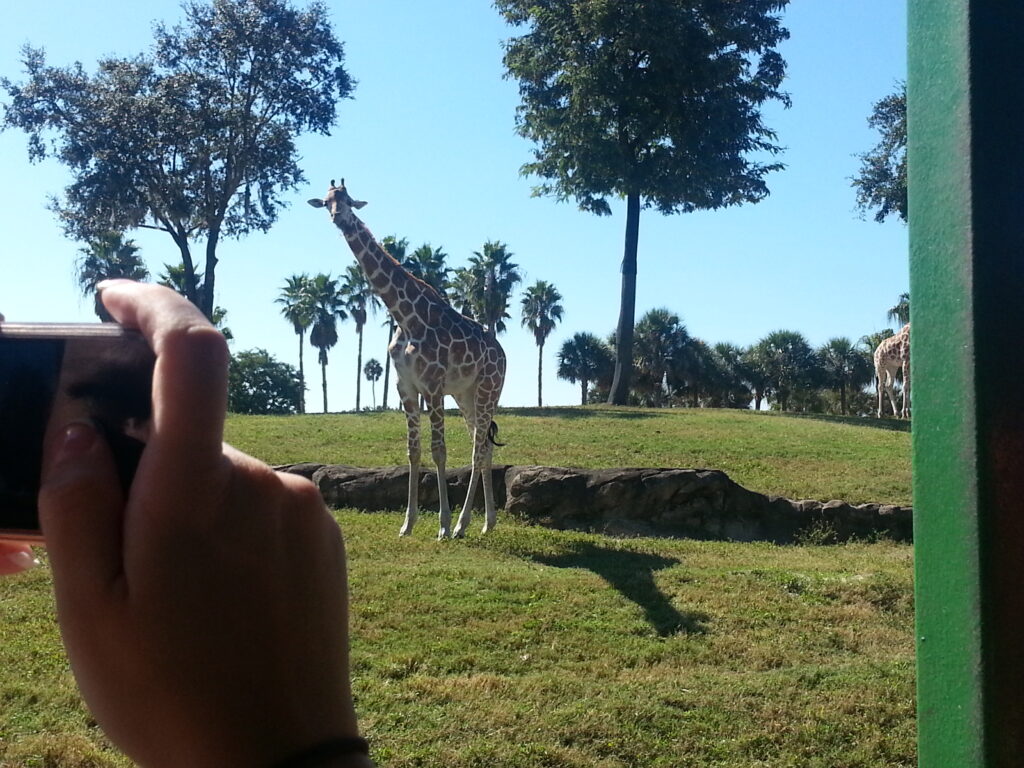
“Busch Gardens Giraffe” by James Riley is licensed under CC BY-SA

The original image is from a trip to Busch Gardens in Tampa, Florida. My friend and I decided to go to all the animal exhibits to check out all the different types there were around. This giraffe in particular caught my attention as I was taking pictures as it looked as though it had spotted me looking at it. However, unfortunately the area we were in was fairly crowded with tourists and the picture had to be taken behind someone else with their hand ending up in the frame.

“I see you! -Giraffe” by James Riley is licensed under CC BY-SA

Here in the Rule of Thirds cropped image, the giraffe becomes the main focus in frame while also emphasizing its glare towards the camera angle. Additionally, you are still able to note its size relative to its surroundings and shadows. Unfortunately, I was unable to adhere both to the Rule of Thirds while also cropping out the person’s hand and giving the viewer a more emphasized photo.

Late night conversations

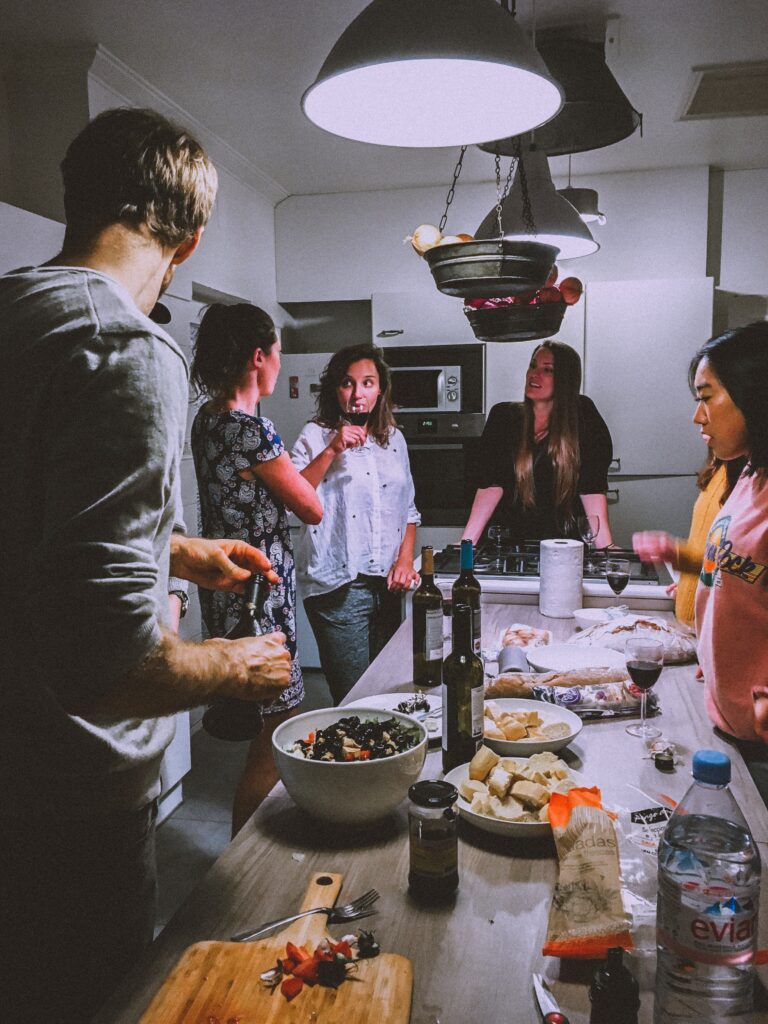
Men and Women Standing Infront of Dinning Table by Lisa Fotos is licensed from by Pexels as free to use

I wanted to find a photograph that was busy in composition, that contained interesting subject matter, and that would benefit from reducing some of the noise in the photo to create a more cohesive appearance. The photo that I chose is that of a group of friends standing around a dinning room table with an assortment of food and drinks scattered about. There are six people in the photograph, three of which appear to be engaged in conversation. The person on the left side, in the forefront, is looking back and to the left. There are two people on the right hand side right on the edge of the photograph. I get a sense that the room that they’re in is filled with various conversations, music, the clinking of utensils, wine glasses, among other things. I feel that it’s most likely a hectic space, while also being, carefree and inviting.

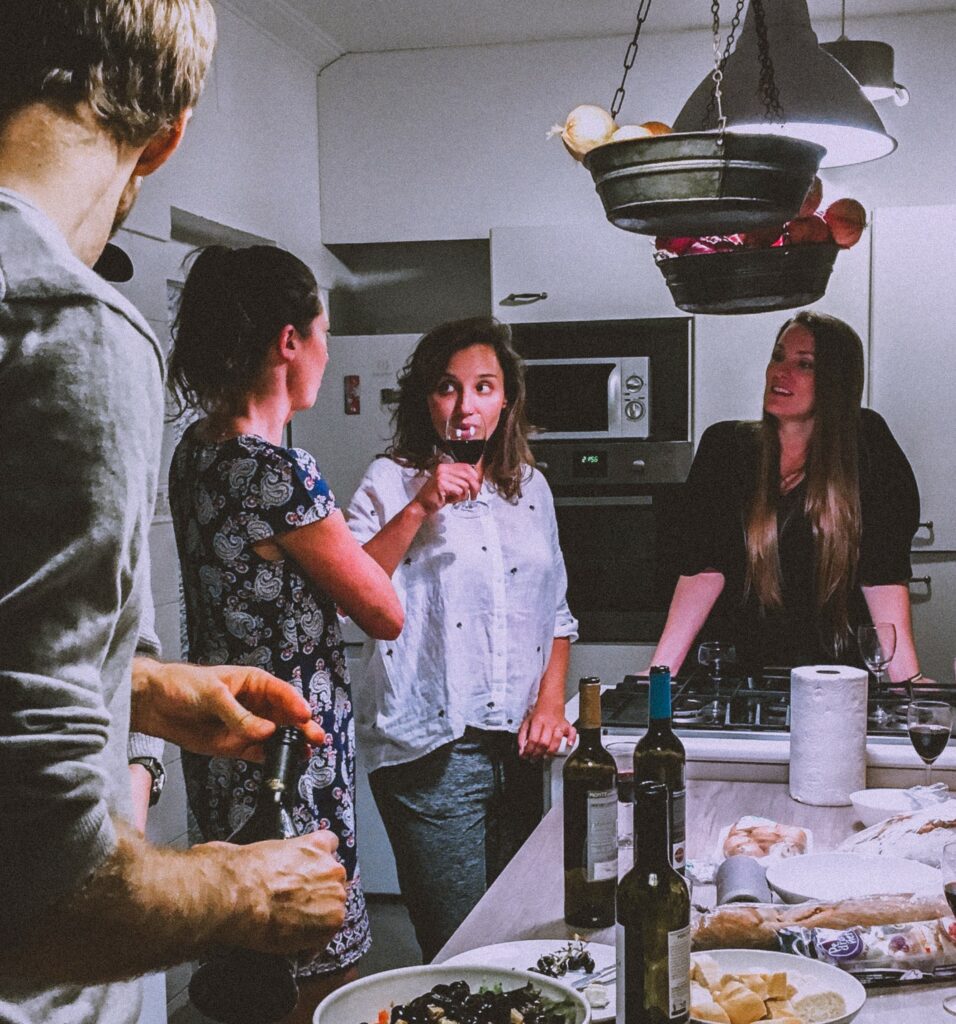
Dinner Party by Ross Treloar is licensed as CCO 1.0

I initially set out to eliminate some of the unnecessary space around the figures in the center of the photograph. The two people on the right hand side were too close to the edge, which created tension in the picture. I felt that the light, the large, bright one on the top, was distracting to the rest of the image. The plates of food and wine bottles at the bottom of the image were also distracting, and the way that the wine bottles were arranged, they created a line the moved up through the middle of the photograph. I wanted to crop the photo in order to focus the attention of the space onto the conversation of the three people in the center of the photograph. I wanted to leave enough information of the person on the left hand side so that they are still visible, and that their position in the room is easily understood. The lady on the left hand side is now the focal point of the photograph. Due to the crop, the gaze of the other two ladies (middle and right) follows straight into the face of the lady on the left. There is enough detail kept in the photo that it retains the feel of a dinner party, while creating a much more intimate composition.