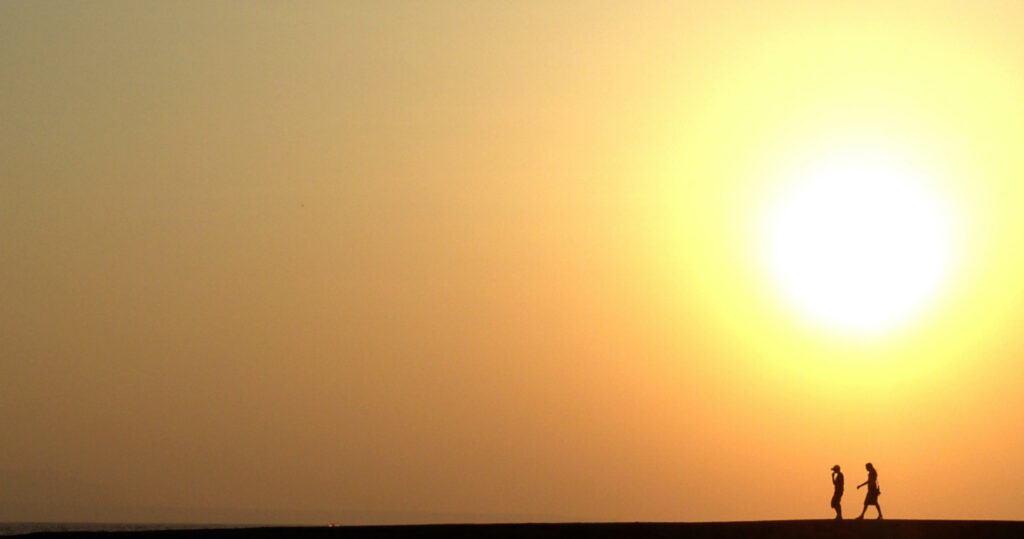
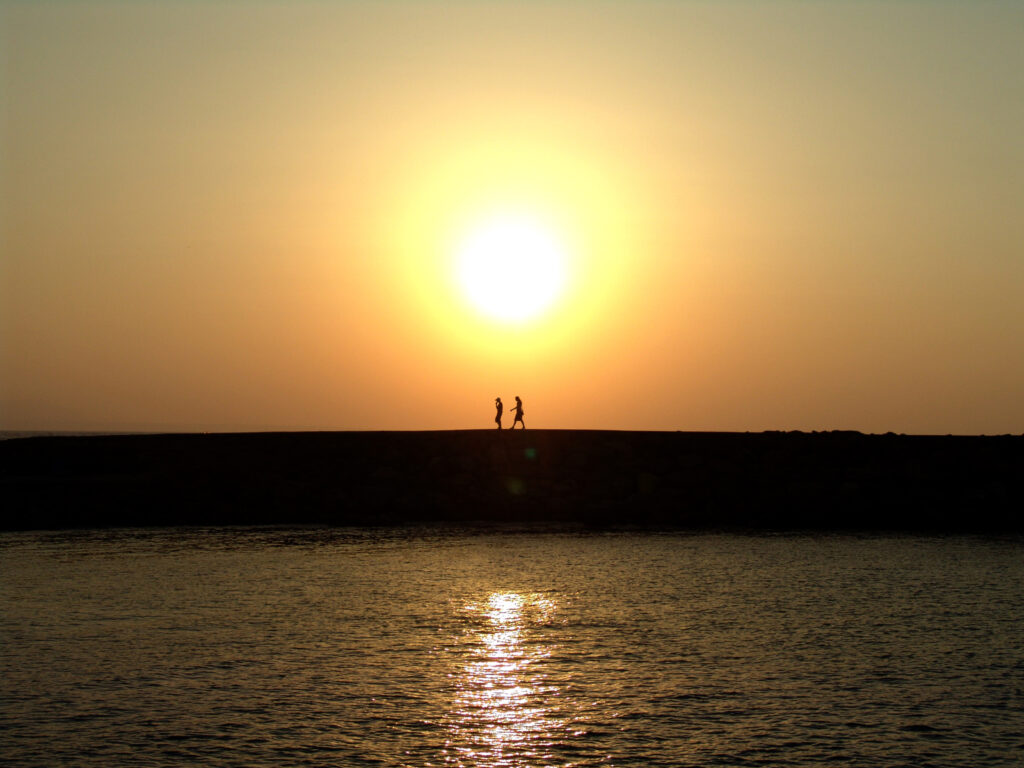
“Long Walk to Water” by Jessica Maya is licensed under CC BY-NC-SA 2.0.
I found it challenging to find a suitable picture that could tell a different story when following the rule of thirds. This exercise really made me think outside of the box. I went through so many pictures but only very few that could give me what I was looking for. In the original photo seen below, the people are the focal point of the image…so is the water and the sun. Cropping the image the way I did makes the image look like there is no water for miles hence the name “Long Walk to Water.” The original could very well be two people walking on the bank of a lake. They look almost like they are from the west with the woman behind having a handbag on her shoulder. Whereas the derivative I made looks like they are in the desert.
Day out at farmland by Saleh Ahmed is Licensed under CC BY 4.0
The original image shows two deer being surprised by a photographer during mealtime. The expression of the deer on the left shows a pronounced expression of surprise, while the other deer looks calmer and less animated. I wanted to crop the image on the left to see if the emotion conveyed by the image changed.
The rule of thirds was applied to the second image. The image was cropped at eye level, and unnecessary details were removed to simplify the image and increase focus on the subject of the image. However, some surrounding area adjacent to the subject was still left to give more context to the image.
Interestingly, the new image tells a different story all together. Instead of the deer being surprised by the presence of the photographer or disrupted in their mealtime, the image feels more relaxed and casual. The deer appears to be enjoying some alone time, engaging in his usual activities, unfazed by the intruder.
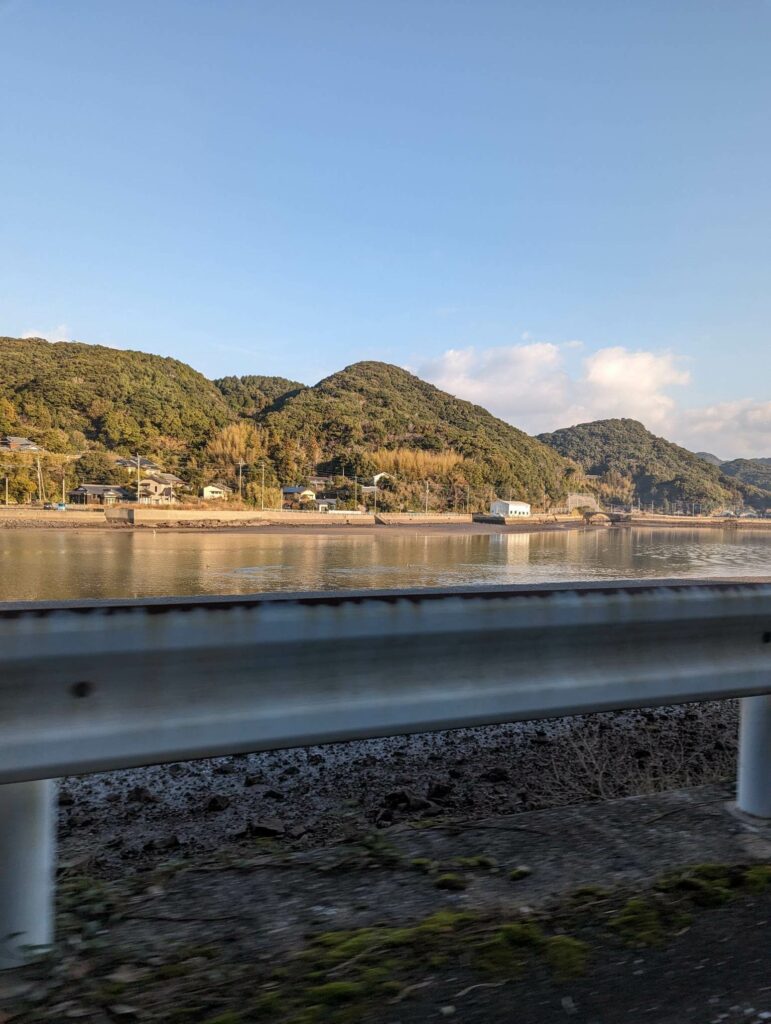
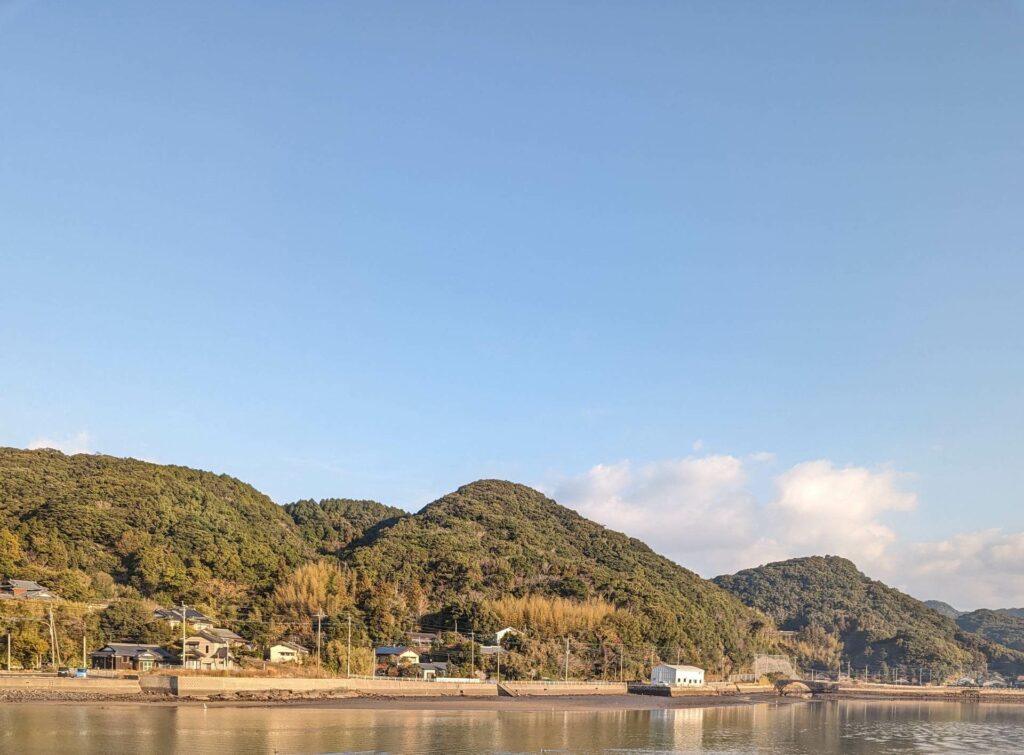
During my visit to my grandmother’s house in Japan, I took a few photos of areas I missed and some of the scenery that was incredibly different from the ones I see daily in Tampa. This was the first day back home in 10 years, outside my grandmother’s house, and I was excited to see lush mountains. This was taken in a car on my way to visit shopping malls where I had hung out in my younger years. This photo was cropped to exclude the grass/moss on the ground and the large barricade separating the pavement from the river below.
Now the image looks light, happy, and clean, similar to how the mountains make us feel.
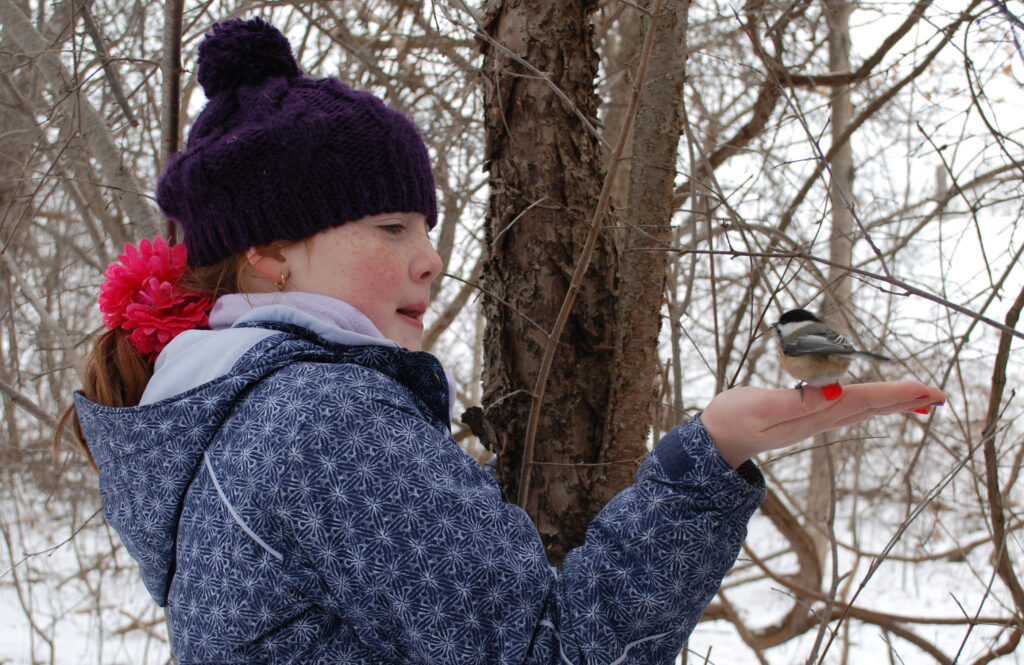
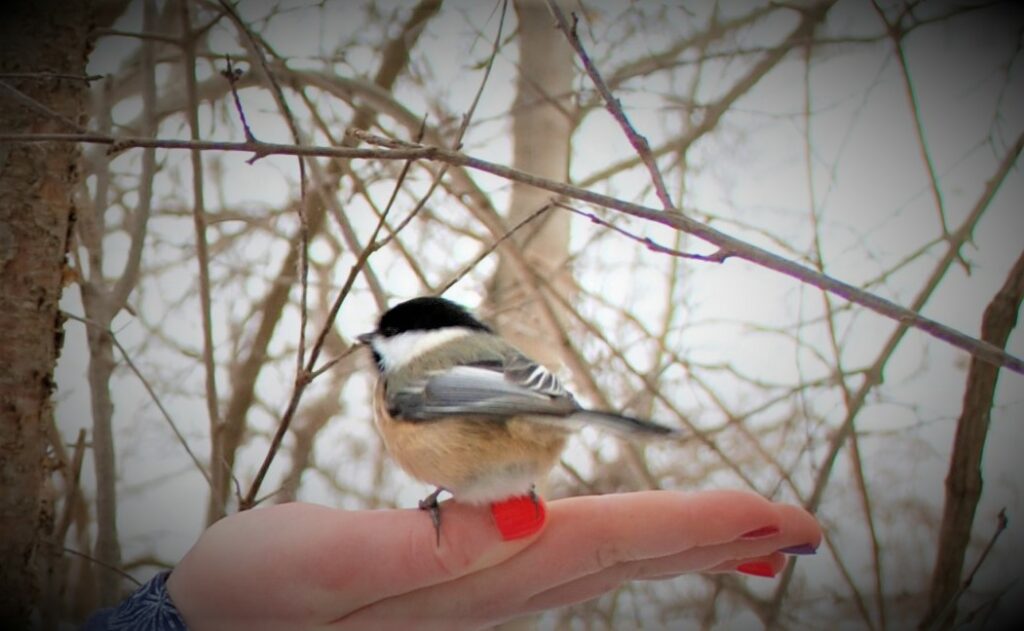
I saw this picture and I thought the focal point should be the bird. I know that the parent/guardian intended for it to be the girl holding the bird. It looks like this great wilderness picture where we all can coexist together. This little bird, maybe it’s a finch, out in the snow and cold, somehow attracted to the little girl’s hand, there’s a story there we don’t have time for. What about the bird? The bird has its own story, how did it even get there in the first place, was it by itself or with other birds, what happened after this photograph was taken? We don’t have to ask those questions if we just zoom in and assume the bird was there. The original picture was so far out so I cropped the picture, made the bird the focus, and focused the picture, I also brightened the image and centered the light more on the bird.
Into the Sunset by Annamarie Vanlier under CC0 1.0
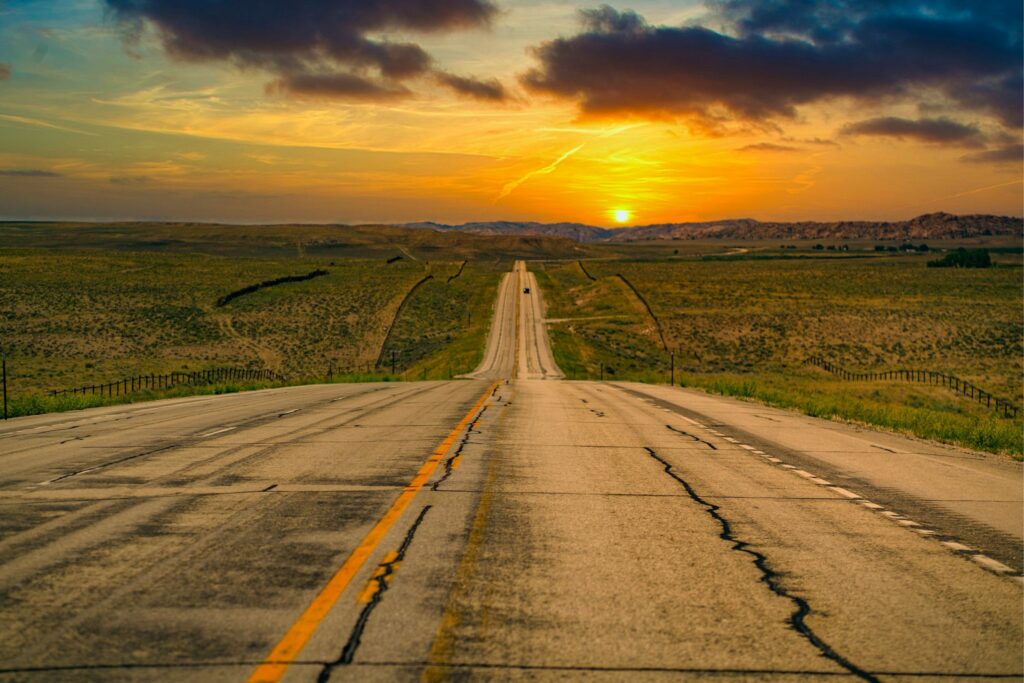
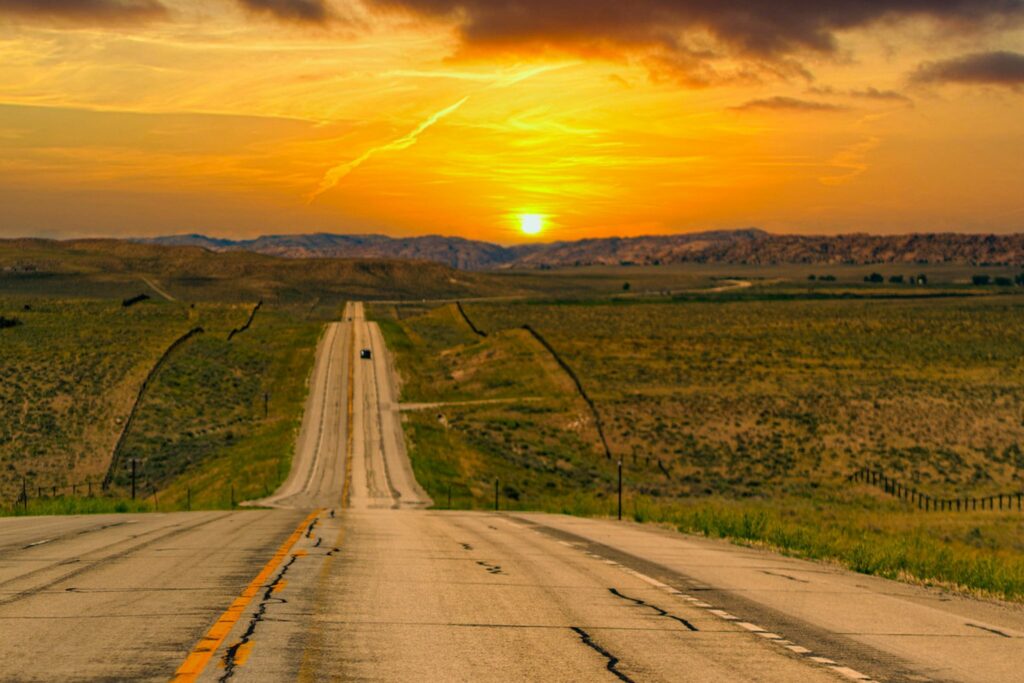
Did anyone else have a difficult time choosing an image for this assignment? I feel like that was the most difficult part! After much deliberation I decided on this photo. In the original the car is so far away it’s easy to overlook. The sky also shows more of a sunset or sunrise, with the blue around the edges implying a shift in time of day. The road is featured prominently in the center of the photo, with the sun off to the right.
In the crop, the car is larger and easier to take note of. The road is in line with the first vertical line of the rule of thirds grid. The sun is now almost centered in the image. All of the blue from the sky has been cropped out so the sky is a full fiery orange and yellow. This makes the image feel much warmer overall.
This derivative uncenters the main focus (the road), and it changes the mood of the photo.
“Our World” by Humberto Messeguer is licensed under CC BY-SA 2.0 (Cropped)
There is a beauty to this world and some images can capture the magic moment to it.
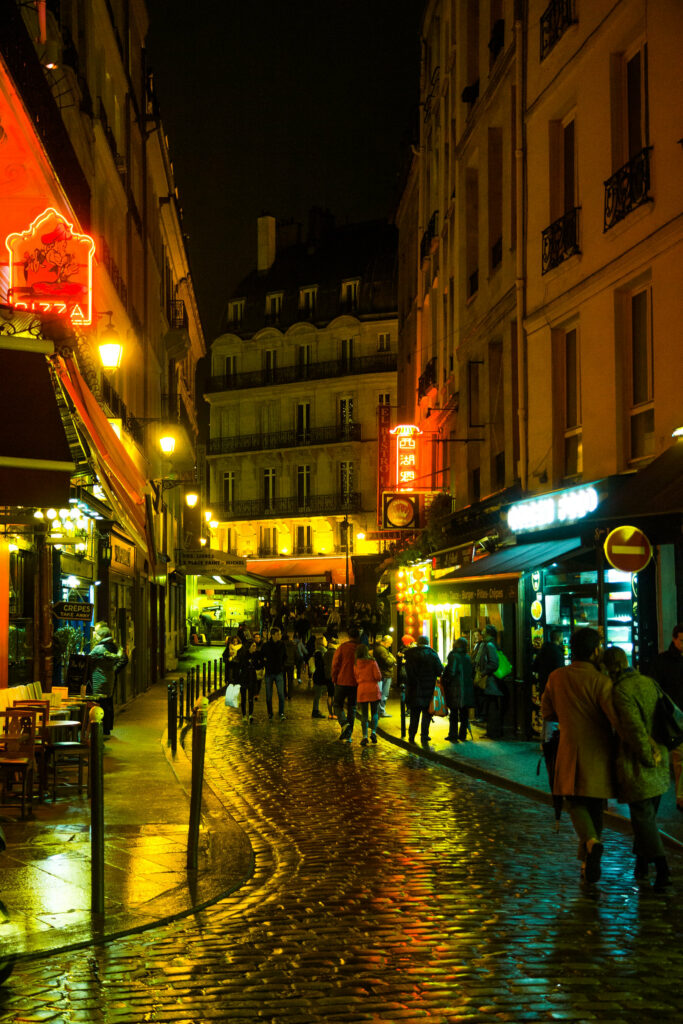
While looking for a picture that resonated with me, I found “Latin Quarter” by Hernán Piñera. This picture reminded me of the magical aspects of the world such discovering or exploring a new place with someone you consider special.
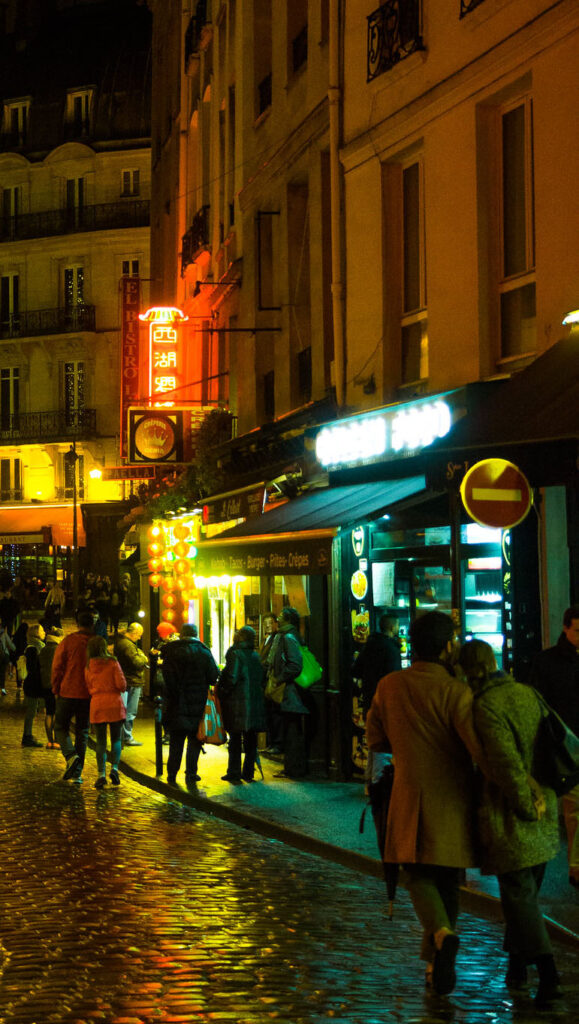
When looking at “Latin Quarter” by Hernán Piñera, your eyes are pulled to the vibrant colors and lights, the reflections on the stone, and the people. I wanted to bring users to fixating on what I considered was a critical part of the image which was the couple in the bottom right which can be seen below this sentence.
The couple is what I envisioned the moment between two people were you are “the main characters”. The world revolves around you and you’re living in the moment with that special person. That’s where the magic is truly created and the moment a lot of people look forward to with their partner.
We should all strive to have that magic moment. It doesn’t matter if it’s with someone else or by yourself. You’ll know when you have it because it’ll become a memory of a moment in your life that you’ll be able to recall.
Seek the world and learn something new everyday. That’s how you’ll get those moments.
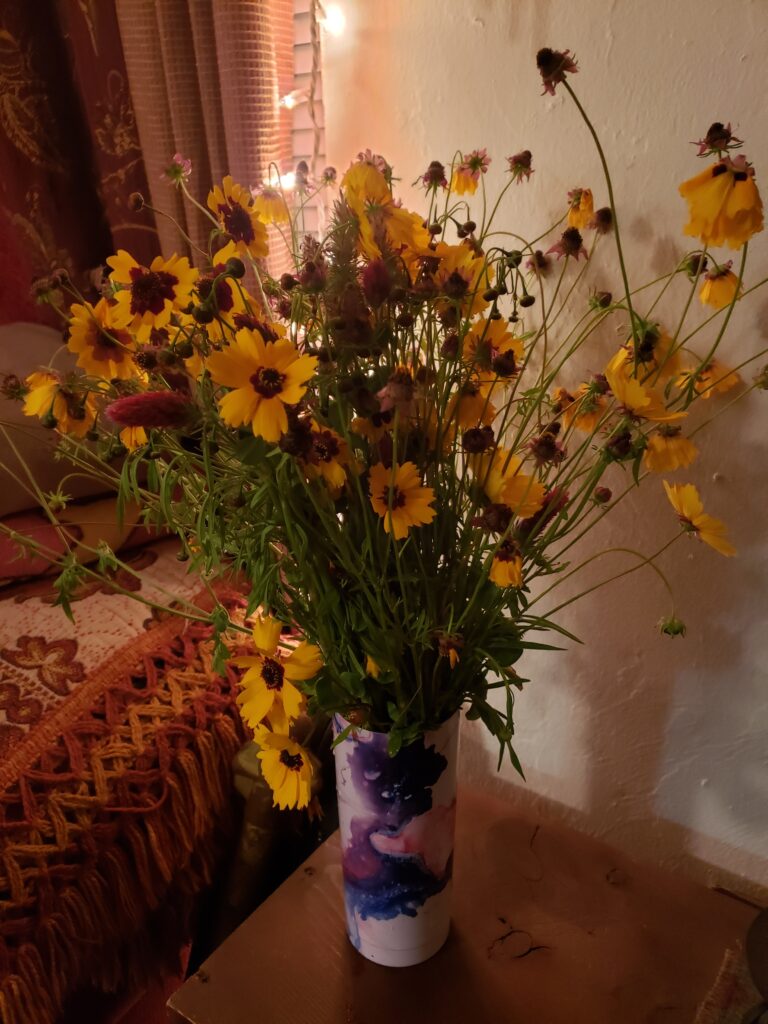
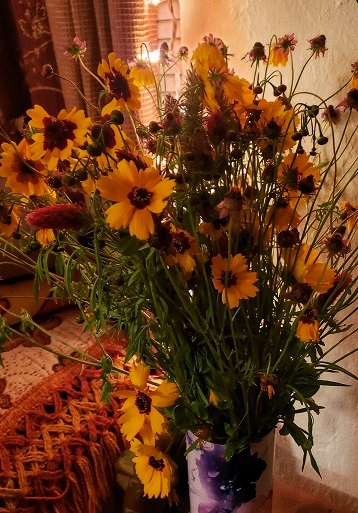
The year is 2020 and the inconceivable has happened. Human civilization became confined, stressed, and uncertain. In the meantime, something magical happened, the natural planet received a moment to reset. On a day when cabin fever became overwhelming, I made a large cup of coffee in my pastel travel mug, hopped in my car, and just drove. I had no destination in mind, just windows down, sunroof open, and stereo loud. I don’t recall where I was exactly, but I looked over and in my solitude, noticed that the entire median was an untamed field of wildflowers, pristine and quondam. With no other vehicles around, not a single person in sight, I pulled to the side of the road, though I probably could have parked my car right in the middle of the highway. I sat in the field and finished my coffee, enjoying the white noise of nature and the sun on my shoulders. I decided that the field wouldn’t miss a few blooms, so I wiped out the inside of my mug with napkins and gathered several handfuls. I’ll never forget the serenity I felt sitting in the sun that morning, watching the bees and butterflies experience their own moments of unadulterated existence.
The blooms did suffer a little on the way home with no water, but the joy and contentment I felt in the moment was undeniable. I wanted to remember it, so I snapped a photo. I did give them water and they perked up. I eventually hung and dried the bouquet and it still has a place in my living room as a reminder that sometimes what we need is a chance to reset.
The cropped photo creates a more dynamic image. Cropping removes some of the distractions from the subject of the photograph and simplifies the background. What do you think?
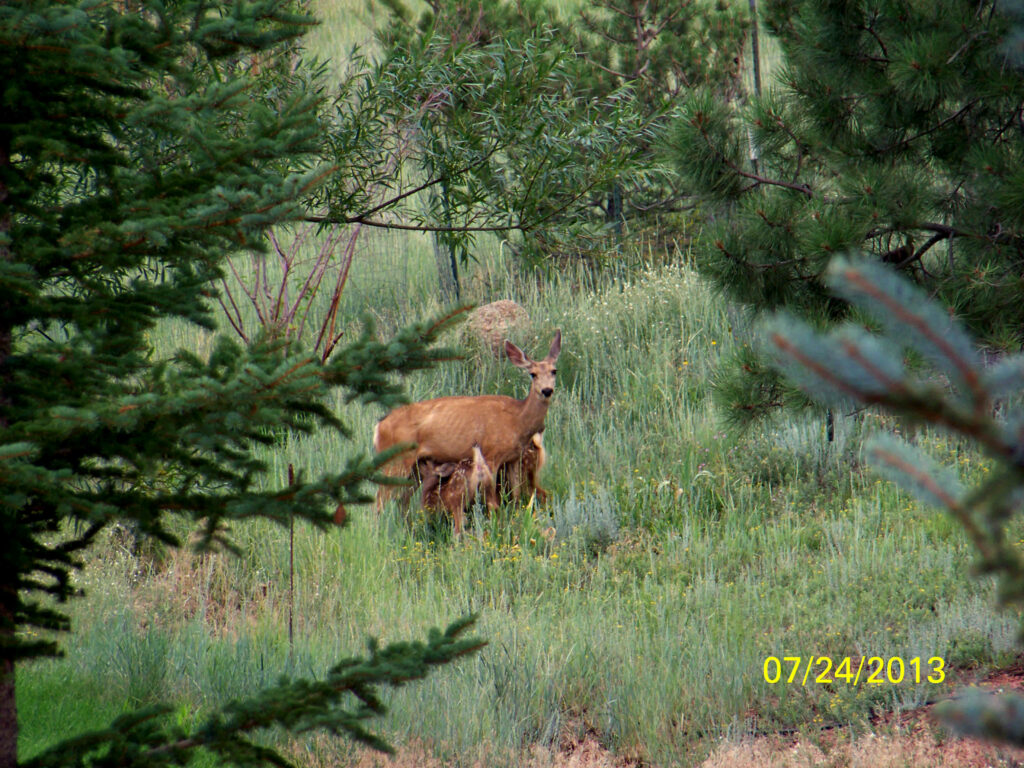
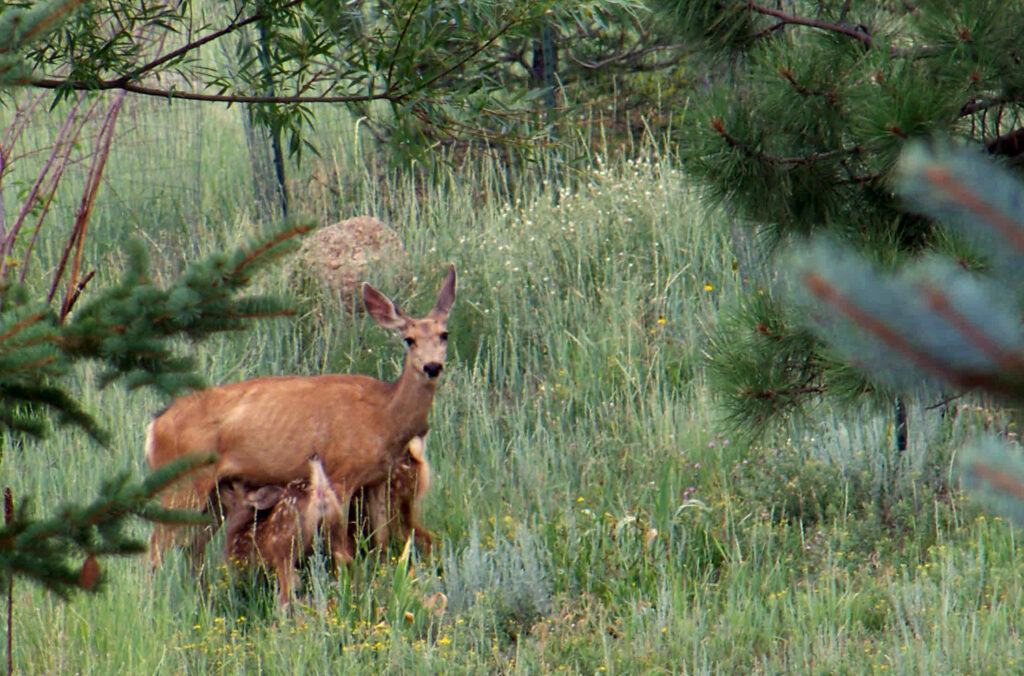
The image I chose to strategically crop is a beautiful picture of a mother deer and her two fawns. I thought this was a great choice to crop due to the subjects being centered in the frame and the clutter of the scene around them.
By cropping out some of the scene, zooming into the deer and using the rule of thirds to place the subject slightly off center – I created a more dynamic image that clearly displays the deer and her family as the subject of the photo.
I decided to go with a composition rule that is a little more standard instead of pushing the composition in a more adventurous place due to the peaceful horizon of the forest. I wanted to maintain that peaceful feeling through the rule of thirds. I think this compositional rule is easy on the eye and lends itself to this subject matter.
What was at first just a documentation of a moment, through simple cropping, became a dynamic composition that would look lovely hanging on a wall as a work of art.
Every year in Delaware, there is a Delaware State Employee Art Exhibition, (siblings of a state employee or the state employee themselves can submit an art piece from several categories) and every year, as a way to show I support the arts, I find something I can contribute I have taken a picture of. You can put a price on the entry, and you can be eligible for being selected for a top prize in various categories, but I still find, one of the best rewards every year is blowing the image up I put in as an entry – and placing the certificate that I entered a piece in the frame behind the picture. I always hang the image somewhere in the house. I feel this helps represent my state of Delaware, as well as my entry to support the arts, and hope others will follow suit in the future.
The Image
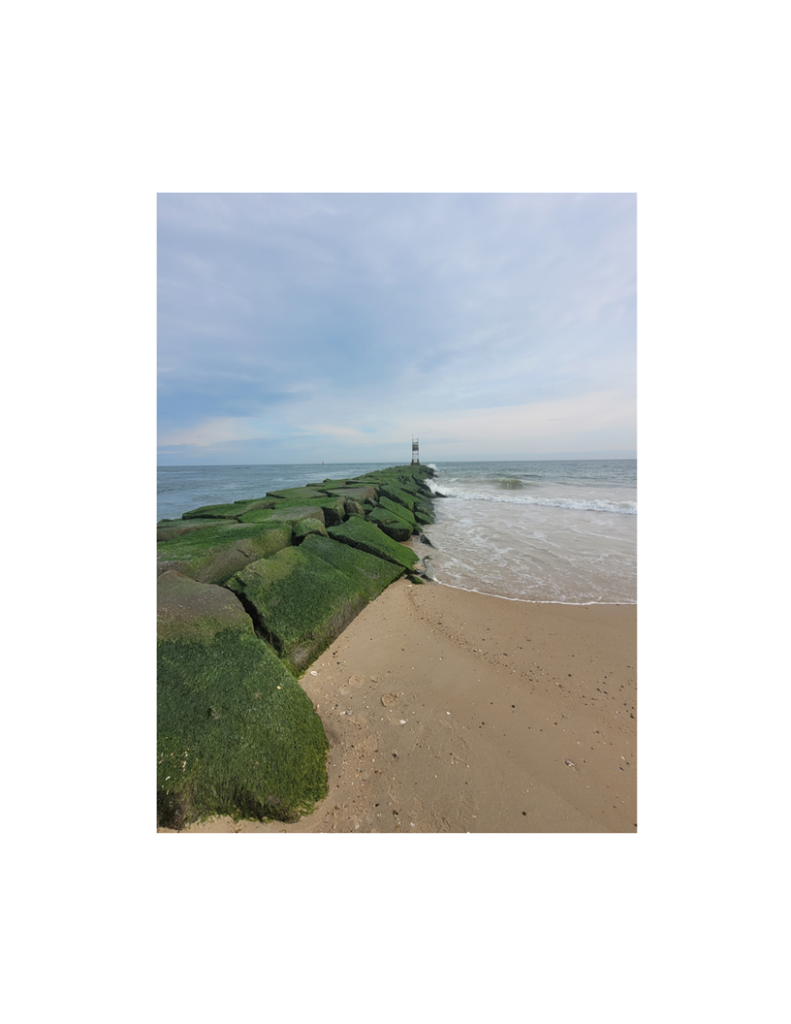
The image I chose was taken on a day in January I found myself still sick from Christmas break, and taking the dogs out to the beach at the Indian River Outlet in Delaware in the Delaware Seashore State Park playing “hookie” from school as I still felt I was not able to go to school and prevent spreading my cold. Yet, the day away and outside with my dogs, helped my recovery mentally and physically, and I was on the look for a scene that would hopefully calm other as well.
Funny thing is, I never look at images in through the lens of the Rule of Thirds when I take them, I just look for an angle or view that many would not see normally and little details that will stand out. I like to capture the colors of the image and an object, as well as the environment surrounding items to allow an individual to feel as if they are in the same location, as much as is possible. Here is the image to the left.
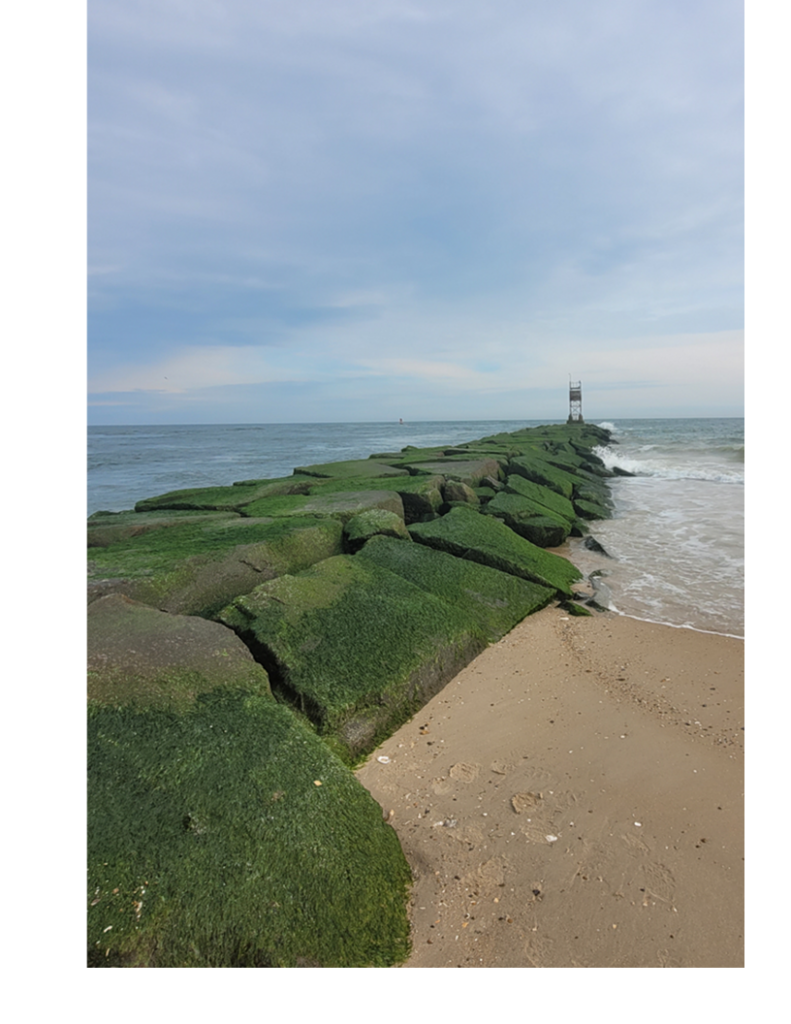
Next, consciously applying the rule of thirds and further scrutinizing how to enhance the image, I came up with the next variation of the image to the left:
And indeed, moving the location and point of view to the right, it does shift perspective and make a difference, I like it. I still wanted the breadth of the sky and water, yet, by including less of the water in the frame to the right, the faraway image of the tower is still within reach, yet still in the distance, but more comfortable falling in a section of the rule of thirds. You can see while keeping the same distance he focus does indeed change a bit with a small amount of cropping and shifting the tower to the right, changing the eye sight focus.
Publisher
I wanted to try out and experiment with the program Microsoft Publisher. At first, since I had not used this before for editing, I stumbled, but as with anything, you work it out with the more practice and experimentation you have.
Inserting the image using the INSERT option/choice is easy- clicking on the image and then choosing PAGE DESIGN, allows you to see a choice titled, GUIDES. Looking through the various types of lines you can add to the image, you do see a Rule of Thirds grid and that helps you decide where to place the image. I was trying to see if I can bring the guide onto the image but it seems the best way is to zoom in on the image and see where from behind the lines fall, not seeing a way to bring the guidelines forward onto the image, but it worked.
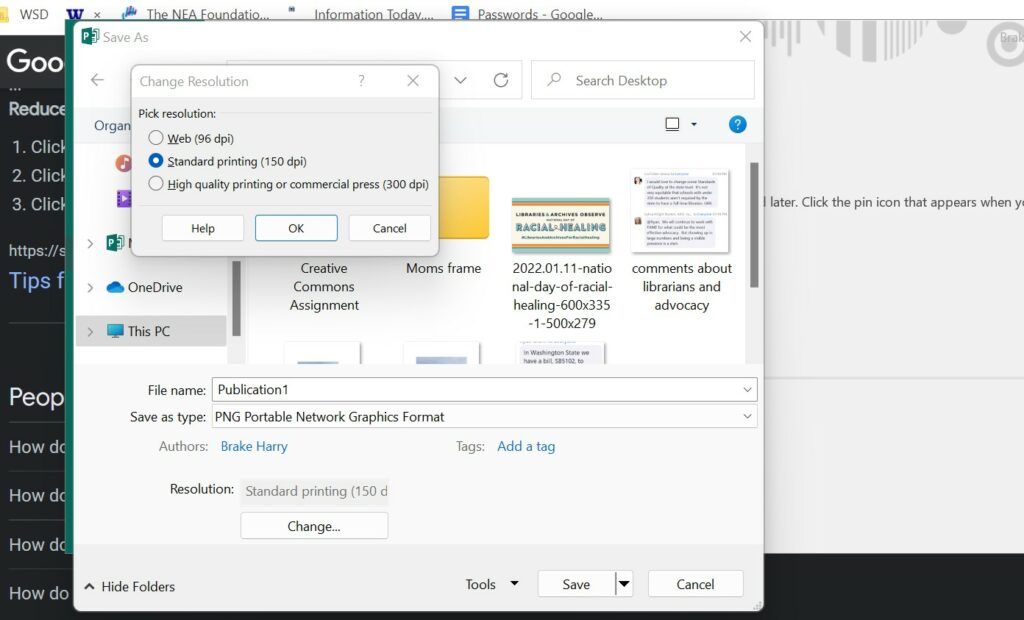
By clicking on the image, THEN a FORMAT menu option appears, and you can choose CROP, which brings a frame surrounding the image visible, allowing you to maneuver the frame around the edit you want to make to crop your image into a new, editing version. As you can move the image or the frame around the image, keep aware of the grid behind so you know where the central focus of the viewer falls in relation to the rule of thirds, then click outside the image, and voila! Save the image but here is a tip, when saving the image, you can decide what resolution to save it as, by paying attention to the CHANGE option after you go to the SAVE menu- see below:
Using the CHANGE option in Publisher for Resolution changes
allowing you to manipulate the resolution. I realized the best lesson is the one where you are forced to learn new aspects of a program by going in and searching, experimenting, and discovering every menu option of a program, giving yourself time to discover a program. A sense of calm occurs when you GIVE yourself time to so, as I hope this image provides calm to those that view it as well 🙂 (I also discovered this cool DPI-PPI converter as well 🙂 )
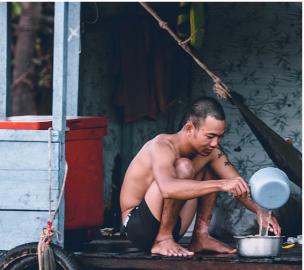
For this assignment, I was looking for an image which when cropped changes the focus from pain to pleasure or from hardships to hopefulness. After several attempts, I was convinced to use this picture.
The original depicts a man pouring water into vessel while sitting in a floating cart but the other focal points in that picture are the flowing dirty water. My assumptions made me judge that the man may not be leading a fortunate life. I inferred to this point because of the distractions in the original picture i.e., the water beneath.
When cropping the original picture using rule of thirds, I removed the flowing dirty water and the portions of the cart, so that the man becomes the main focal point. On seeing the cropped image, the viewer’s opinions may turn neutral rather than assuming that he is undergoing hardships. I was fascinated to see how the change of focus obtained through the rule of thirds can change our perspective towards the people in the picture.