The podcast where we stir coffee and stir up trouble by asking my housemates controversial questions. Each morning we come up with a new question to ask the unlucky housemate to walk into the kitchen. So feel free to relax, sip your coffee, and let the drama unfold.
The sound elements you will experience will take you into a kitchen scene. You will hear the coffee brewing, the drink being poured, and the sound of the window opening to morning birds. This is all after an enticing musical intro to wake the listeners up and kick-start the podcast. And is it even a good podcast if it doesn’t end with the sound of an overly dramatic sip?
The podcast would be a series about mental health services in America. This particular episode centers around a resource that the Jacksonville, FL area has in cases of non-emergencies and discusses Mental Health Resource Officers.
The Bert Show Podcast is a podcast where we mainly talk about sports guest that I’ll eventually invite onto the show. It mainly focus for the show is where we go through all the different types of sports and the news that’s currently happening in those “worlds” . Sports are very popular in the united states and as a person who works within IT and Cyber Security often, I wanted to do something that’s more relaxing and can easily engage and relate to my users. Think of it as a very similar podcast goal to “The Herd with Colin Cowherd” or “The Bill Simmons Podcast” where it’s mainly one individual who is able to talk to themselves for a period of time while explaining their thoughts. Really fun way for me to just kill some time!
For the Visual assets used, I wanted a “hipsterish” but pop culture type of vibe to the show which is why I picked “Question” by Osbornb. It was an image that resonated with me but also is kind of what a podcast is. You the listener are enjoying content made by one person and the whole experience can immerse you and make you feel like it’s a one on one conversation.
For Audio Assets, I wanted something that felt “in your face” while also sounding exciting. The Boxing Arena Sound by Samantha Enrico pulls the listener immediately. I call it an attention grabber sound while the sound is able to provide some sort while to myself as I begin the intro and get the listener into a vibe/mood. I was able to incorporate some fades in the beginning and end while adjusting the volume midway so that it could provide some audio clarity.
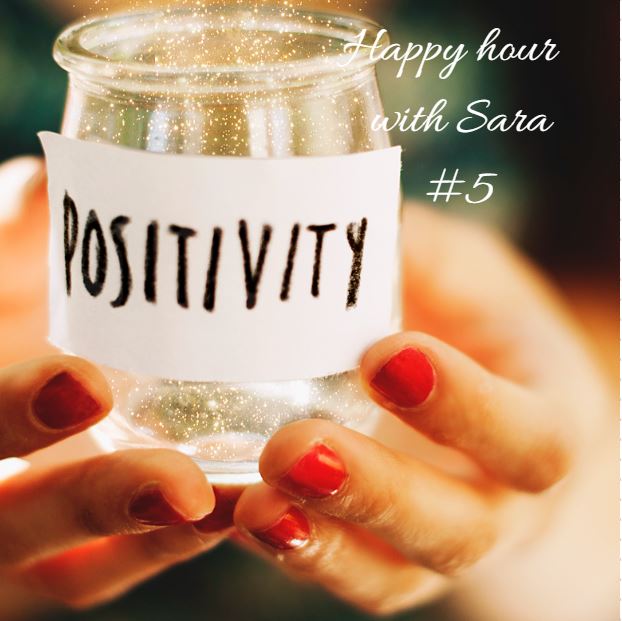
“Happy hour with Sara” podcast series is licensed under CC BY 2.0
‘Happy hour with Sara’ is a podcast series which talks about positive affirmations which would cheer up any soul at any day and any time. It doesn’t offer the cliché positivity ideas but discuss about how can one stay positive naturally and break the myths woven around ‘staying positive’. The fifth episode of the podcast series is featured in this blog post where in, I talk about how the fuss about ‘toxic positivity’ portrays that optimistic people forcefully show themselves as positive while not realizing that the bad things are not actually bad. Little does the people know that staying positive is not about ignoring the bad but accepting bad and putting time and energy yo overcome it rather than drowning in it. Listeners of this podcast can have a dose of positivity every time they hear it. The best time to hear this podcast is while starting a day , while commuting to office and getting ready to wrap up a day.
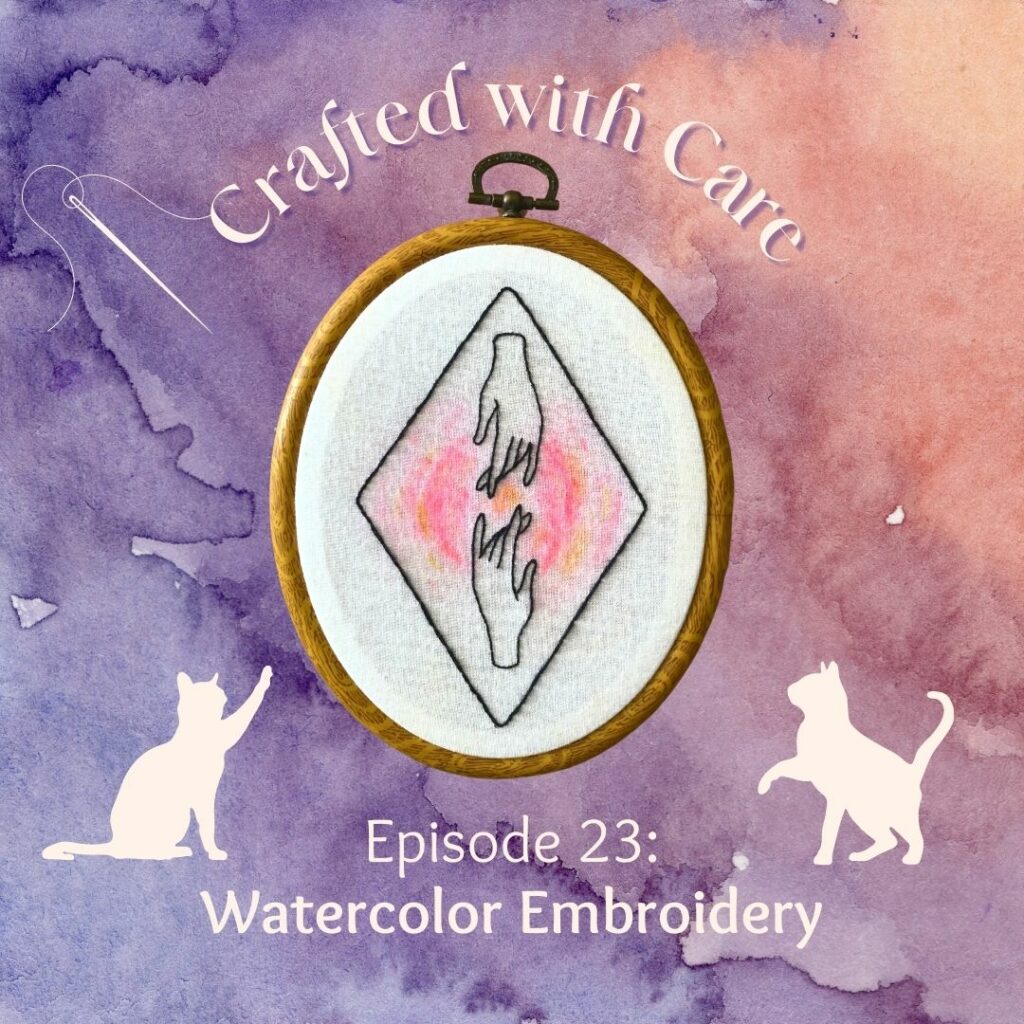
“Crafted with Care – Episode 23: Watercolor Embroidery poster” by Annamarie Vanlier is a derivative of “Connections” by Annamarie Vanlier, both licensed under CC BY-NC-ND Promotional image created using Canva.
This podcast makes use of sound effects, voice overs, and music. I used a little musical ditty to welcome listeners into the podcast. I had the audio fade as my friendly intro to the podcast starts. At the end, I added the sound of paintbrush swirling around in water and then two clinks to signify tapping excess water off on the rim of the water cup. My voice still has an echo, but this being my first foray into audio editing, I feel pretty good about this assignment!
Car Care is a monthly podcast for car lovers. Every month I will be discussing different topics relating to car detailing and products for the enthusiast in all of us. Follow my podcast to get the most up-to-date information on the market for the car of your dreams. In today’s episode, I will discuss the benefits of a ceramic coat and how to apply it to your car’s exterior. Ceramic coating not only reduces the frequency of regular car washes but also the time it takes to do them while providing exceptional shine to your car.
This podcast makes use of overlapping sound effects, voiceovers, and music. I overlapped a car racing sound effect with the intro and outro music to set the tone for a car podcast. The intro music is meant to be lighthearted and welcome the audience, while the outro music is a casual piano montage to signal the end of the podcast. I also reduced the volume of the music during the voiceover and increased it near the end. I used a fade-in effect to join the three sounds together.
“Backyard Birds” by Julia Bomalaski is licensed under CC BY 2.0. It is a derivative of “Bird” by Dave Williss licensed under CC BY 2.0. Downloaded on 2/14/23 and edited in Photoshop.
“Backyard Birds Podcast Intro” by Julia Bomalaski is licensed under CC BY 3.0. Created in Audition.
For my podcast intro I used three of the sound categories: Voice, Ambient Sounds, and Music.
Voice
For the Voice, I recorded myself saying the intro blurb. I put on my best “NPR”-esque voice to try and sound soothing and educational. The target audience is an older audience of bird watchers or bird enthusiasts.
Ambient Sounds
The Ambient Sound is the recording of a backyard with birds chirping and wind chimes. This was a soothing and topic relevant ambient sound that adds to the relaxing feel I was going for.
Music
The Music I went with is a catchy, but still soothing guitar riff. It pulls the listener in at the beginning and sets the tone for the intro.
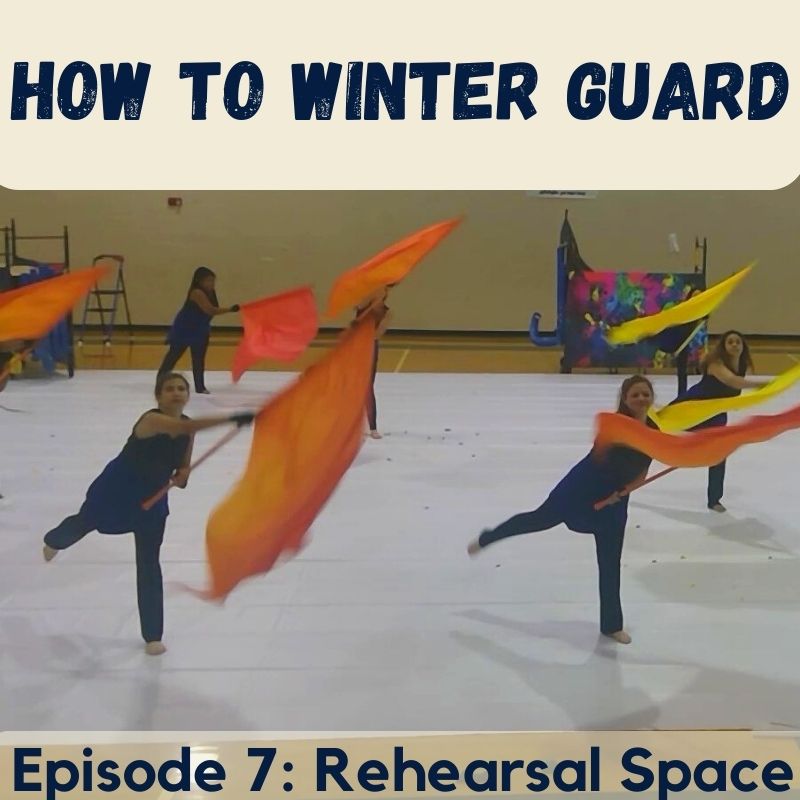
“How To Winter Guard” by Mellissa Clark is licensed under (CC BY NC-ND 4.0)
“How To Winter Guard” is a monthly podcast that discusses the many aspects of creating a new Winter Guard team. This monthly podcast will discuss the various hurdles one is presented when creating a new team. Each episode will deliver tips on how to overcome challenges, what to expect at each step of the journey, and how to best plan for an upcoming season. There may be special guests along the way, but rest assured, each episode will deliver comradery for the sport and first hand experience with creating and building a great winter season.
How To Winter Guard is dedicated to preparing new instructors, schools, and teams for what may happen on the way to the gym floor. It is meant to be a realistic view so all involved can enter the season with their eyes wide open. Of course, there will still be laughter and joy for the sport as we discuss the very real obstacles and milestones that are met along the way. Winter is the best season for guard and this podcast will celebrate it in all its glory, even parts that aren’t so glorious 😉
This podcast will use clips from judges tapes, voice overs, rehearsal clips, and absolutely there will be music!
In Episode 7 we start with a voice over and a count off (5,6,7,8). As this is an episode about rehearsal space, throughout the piece there are clips from a rehearsal. You will hear counting, flags rustling and rifle catches. There is music accompanying the episode, as we are discussing guard, a sport that relies heavily on music interpretation, music is a must. At one point there is an added bonus of a clip from a judge’s tape that is full of excitement for the upcoming season, a good lead off to an episode discussing Winter Guard, I thought. This episode closes as it began, with a count off.
“How To Winter Guard-Episode 7: Rehearsal Space” by Mellissa Clark is licensed under (CC BY NC-ND 4.0)
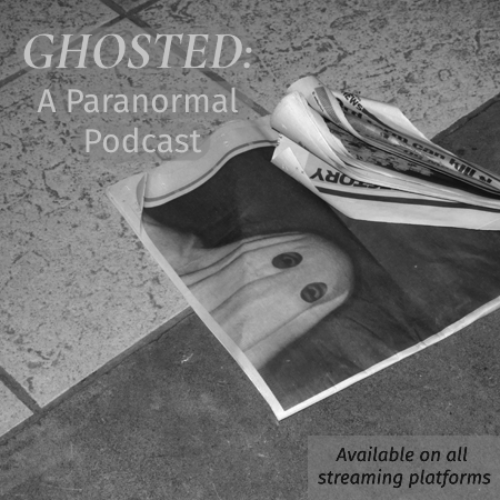
“Ghosted” by Alex Hukill is a derivative of “ghost” by jonfeinstein, which is licensed under CC BY 2.0. Originally downloaded on 2/7/2023 and edited with Photopea.
Ghosted: A Paranormal Podcast covers everything ghostly. The host, Lisa Spirit, is a retired mortician who loves all things scary. Of course, not every episode can be jam packed with verifiable spookiness, so she occasionally takes calls from her loyal listeners. This week, Jimmy McJames calls in with a bizarre issue in the kitchen.
This podcast has a Halloweeny background track that fades in and out. I recorded the intro with as little background noise as possible, trying to sound somewhere between an amateur podcaster and a professional. The ringtone was added to signal the caller segment. I added distortion to “Jimmy McJames'” call, making it sound like he was calling from a less-than-stellar connection. I also slightly distorted the toaster sounds to match them with “Jimmy’s” voice.
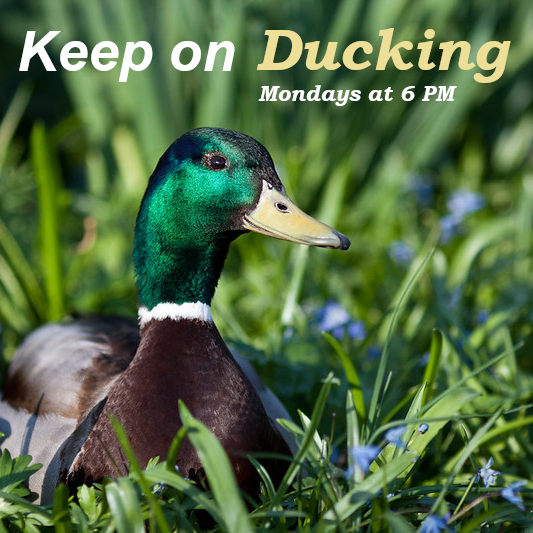
The Keep on Ducking Podcast is a podcast that is streamed every Monday at 6:00 PM. It focuses on the many aspects of competitive duck herding. This podcast will help spread the word of competitive ducking herding, especially in the United States, where it is known by only a select few. It encourages efficient communication, teamwork, and the ability to focus under pressure. Duck herding combines fascinating stories, as well as historical and scientific facts. I ultimately wanted to do something completely obscure. I originally was going to do a cooking show, but since that was the example in class, I decided to change it to something else.
The audio aspect of the podcast uses voice recording, music, and sound effects. There are two “duck” sounds and since they were mainly sounds of only ducks, I classify them as sound effects. They both fad in slightly for half a second and fade out with a studio fade. The duck sounds help break up the audio into smaller sections, preventing a monotonous 30 seconds. The music is an instrumental jazz tune. For some reason jazz just seemed like the type of music that Ronald would listen to. It helped tie the entire audio segment together. The music fades out at the last second to create a gradual dissolve. I recorded myself for the voice portion. I used the limiter, normalize, filter curve eq, and the noise reduction effects to fine tune the voice recording.