
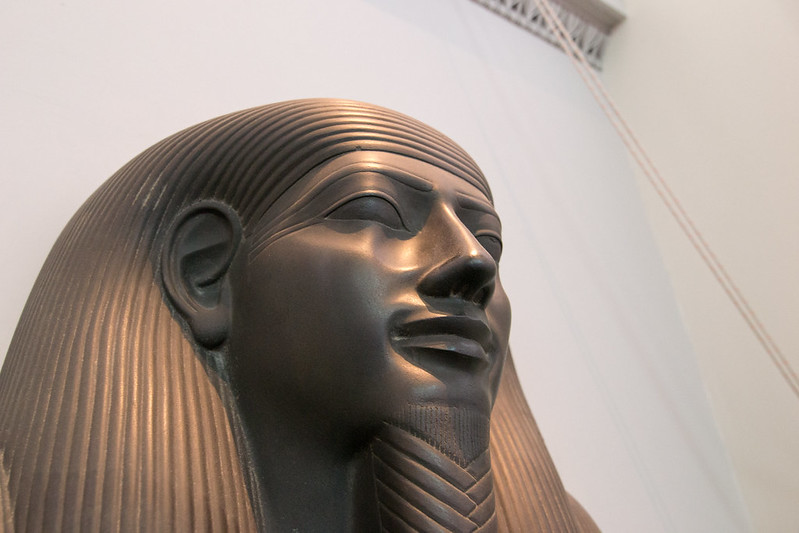
As an avid learner about ancient cultures, and a graduate of an anthropology program, one of the most fascinating cultures was that of ancient Egypt. The plethora or subcultures, the variety of artwork, the ingenuity that has stood the test of time, and a locality all its own, Ancient Egypt has been at the top of my study interests for quite some time. The above image on Flickr, entitled Ancient Egypt, by jpitha is one that I located after an extensive search through creative commons. The regal appearance, the use of parallel lines, and the unique applications associated with a metal work bring to life the concept of a pharaoh.
To complement the image of this pharaoh, the audio of Film Reveal by SergeQuadrado, contains that of many common instruments found in classical music, but applicable to the plight of a ruler. The piano is the solo piece, with epic persona, elegant mood, and an almost cinematic perspective. The music can be seen as mysterious, prominent, calm, intriguing, and even resembles the ambiance of a strong powerful quiet ruler. The music mirrors that of a pharaoh who would find themselves challenged, yet remain steadfast in their perspectives and decisions, much like that of the music linked above.
One of the most interesting aspects of this process for me as a future librarian, was that it allowed me to dive deep into my ability to connect imagery and audiology. The image displays power, much like that of the music, which is one of the key aspects of why I am so enamored with the Egyptian culture and history. The challenge of connecting the two and creating a seamless relationship was daunting, but much like that of a ruler in Egypt connecting unrelated cultures, this process was both rewarding and satisfying.
Terms of Use: “Bold and Regal: History’s Rulers Defined” by Kelly John-Strate is licensed under CC BY-NC-SA 2.0


Hi Kelly!
I don’t know too much about ancient Egypt, but the picture you chose leaves a remarkable impression. The filter/editing really makes the pharaoh glow. The seemingly-golden pharaoh looks like something of high-value, like something that one might find in a prestigious museum. Based on the other images by the photographer, it’s very possible it actually is something in a museum, too.
The audio you choose feels very light and airy to me, with a clear piano sound. It reminds me of a very specific kind of elevator music that’s more soft than most. To me, it felt like the audio enhanced the picture rather than changed its meaning. It made me feel like I was in the museum, walking through hallways and large, open rooms to see a variety of unique, historical pieces. Alternatively, I could also see it being the intro audio to a cinematic documentary on ancient Egypt and its pharaohs.
Hi Kelly,
I think your audio matches well with your photo as it really highlights the “British Museum” aspect of this particular image. It seems on the surface to be mismatched but not when you consider the context of the photo and what it represents. The brevity of the tune and its invitation to peaceful reflection compliment the aseptic location where the object is housed now that it has been removed from its culture of origination. He is no longer a man who rules, he has been reduced to only an object for “I was here” photographs in a far away land. Here, through the process of museumification, your image truncates the complicated reality of ancient power into a polished bite size as well. Overall, I want more from both pieces, but am left hanging. This is an interesting artistic approach that evoked a distinct emotional response. It is fitting because there is so much that we will never know about this man’s life and our minds long to fill in the blanks.
Hi Kelly! I love this. I’ve always been intrigued by Ancient Egypt. This pairing stood out to me because of the strong sense of authority conveyed by the image of the pharaoh. On its own, the image communicates power, permanence, and leadership rooted in ancient Egyptian culture. The audio feels cinematic and regal, and when combined with the image, it strengthens and enhances those themes rather than changing them. Together, the image and sound create a cohesive interpretation of rulership, legacy, and how leaders have historically been represented through art.